
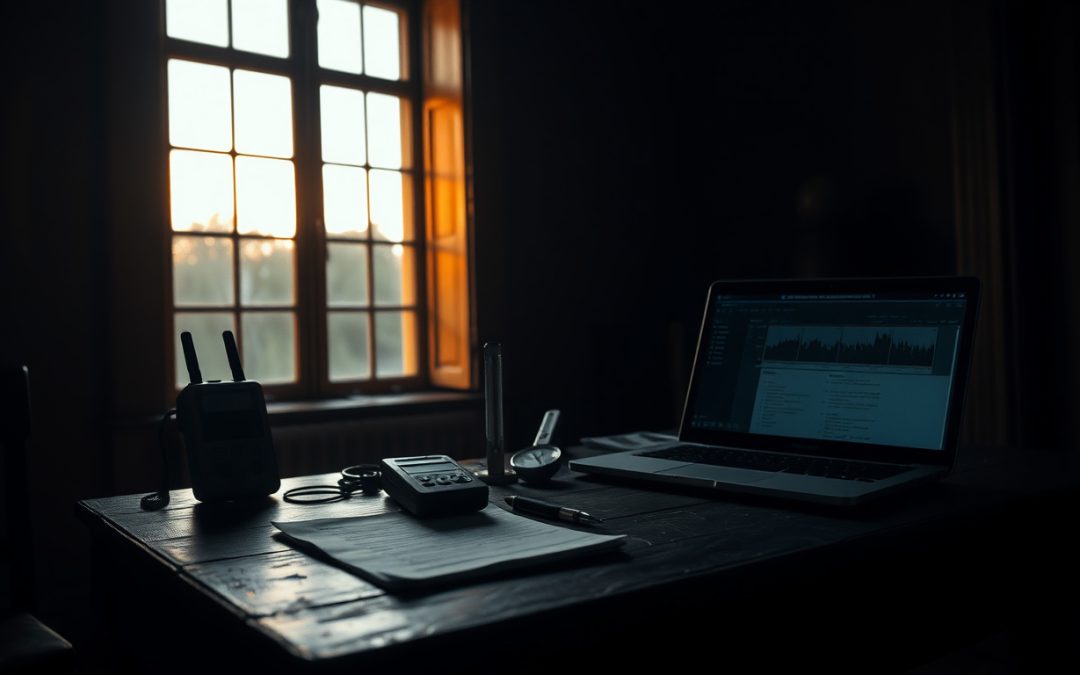
The most important document in any investigation is rarely the one people talk about. It isn’t a dramatic audio clip or a blurry photo. It’s the client report: the plain, organized record of what a household experienced, what you did about it, and what you actually found. Good paranormal research lives or dies on that document. It’s the difference between a night of guessing and a case that means something to the people who called you.
Most families who reach out are not looking for a spectacle. They want to sleep. They want to know whether the footsteps in the hall are worth worrying about, and they want someone to take them seriously without laughing or, worse, frightening them. A report is how you honor both of those needs. It tells them exactly what you looked into, what ordinary causes explain, and what — if anything — stayed unexplained after honest effort.
This guide walks through what belongs in a client report, section by section, and how to keep it grounded in evidence rather than atmosphere. The goal is a document you’d be comfortable handing to a skeptical relative, an insurance adjuster, or a scientist. If it can survive that, it’s done its job.
Why the Client Report Matters in Paranormal Research
Think about the position a client is in. Something in their home is bothering them enough that they’ve invited strangers to spend a night poking around with cameras and recorders. That takes trust. The report is where you repay it.
A strong report does three things at once. It gives the client a clear, calm summary they can actually use. It creates a permanent record that lets you or another investigator revisit the case later. And it forces you, the writer, to be honest — because vague impressions collapse the moment you try to write them down as fact. When you have to put “cold spot in the hallway” on paper, you also have to answer the next question: how cold, measured with what, compared to what, and was the window open?
The discipline of documentation is the quiet heart of good paranormal investigation. The instruments get the attention, but the writing is where rigor either shows up or doesn’t.
Who the Report Is For
Write for two readers. The first is the client, who may know nothing about electromagnetic fields or infrasound and shouldn’t need to. The second is a future investigator — possibly you, a year from now — who needs enough detail to understand exactly what happened. Serve both by leading with plain-language summaries and backing them with technical appendices. Never bury the client under jargon, and never leave the technical reader guessing.
The Core Sections Every Client Report Should Contain
There’s no single legal template for this work, so treat the structure below as a reliable framework rather than a rulebook. A thorough paranormal research report generally moves from context, to claims, to method, to evidence, to conclusion. Each section answers a specific question a careful reader would ask.
1. Case Overview and Client Details
Start with the basics: a case number or file name, the dates of contact and investigation, the names of investigators present, and the location described in general terms. If the client wants privacy — and most do — record identifying details in a secure internal file and use initials or a code in any version that might be shared. Note how the client first made contact and what prompted the call. The trigger event often matters. People rarely reach out over years of small oddities; something specific usually tips them over.
2. The Location and Its History
Describe the building honestly and specifically. Age, construction type, recent renovations, known plumbing or electrical quirks, heating system, nearby roads or rail lines, and anything else that shapes the environment. A house near a busy road behaves differently at 2 a.m. than a rural cottage does. Old homes settle, expand, and contract with temperature. Forced-air heating creates drafts that feel like a presence brushing past. None of this is glamorous, and all of it belongs in the report because it’s exactly what separates a measured account from folklore.
Where a documented property history is available and relevant, include it plainly. Resist the urge to inflate it. A death in a home a century ago is a historical fact, not evidence of activity, and honest paranormal research keeps those two things in separate columns.
3. Witness Statements
Record what each witness experienced in their own words, dated and attributed. Keep interpretation out of it. “I heard three knocks on the bedroom wall around midnight” is a usable statement. “The spirit was trying to communicate” is a conclusion the witness has jumped to, and it should be logged as their belief, not as an observation. Interview witnesses separately when you can. Memory is suggestible, and one person’s confident retelling can quietly reshape another’s account.
Note emotional state and any factors that affect reliability — fatigue, medication, stress, alcohol, or a strong prior expectation of activity. This isn’t about doubting people. It’s about giving their experience the fair, complete context it deserves.
Documenting Method, Instruments, and What They Actually Measure
This is the section that most reports get wrong, usually by claiming too much. An honest methods section describes what you did and what your tools can and cannot show. Readers should finish it understanding your process well enough to critique it.
Be Precise About Instruments
List every device used, along with baseline readings taken before the investigation began. An EMF meter measures electromagnetic fields — from wiring, appliances, phone chargers, and the building’s own electrical system. It does not detect spirits, and your report should say so directly. A thermometer measures temperature. A recorder captures sound, including sound you can’t consciously hear in the moment. State the limits plainly. A device that reacts near an old fuse box is telling you about the fuse box.
Record your baselines. Without a baseline, an unusual reading means nothing, because you have no idea what “usual” looked like in that room. A spike from 0.2 to 6 milligauss is only interesting if you know the room normally sat at 0.2, and only meaningful once you’ve checked what’s on the other side of that wall.
Log Everything Against a Timeline
Anchor observations, readings, and evidence to a clear timeline. The value of a report multiplies when you can line up a reported knock at 12:04 a.m. with a recorder timestamp, an EMF note, and a passing truck logged in the same minute. Correlation is where debunking and discovery both happen. A dedicated case workflow makes this far easier than scattered notebooks and phone photos; tools like the Paranormal Case File Manager exist to keep witnesses, readings, evidence, and debunks in one structured file that exports to a report you can stand behind. Mapping the scene helps too — a layout built in something like the SpecterGrid Location Mapper lets you pin exactly where each reading and claim occurred, which is often more revealing than any single measurement.
Handling Evidence Honestly
Any audio, photo, or video included in a report needs the same discipline. Describe how it was captured, on what device, and under what conditions. Keep the original file untouched and note where it’s stored. If you enhanced a clip, say exactly what you changed and preserve an unaltered version alongside it. An enhancement that can’t be compared to the raw source isn’t evidence; it’s an argument.
Audio and EVP
So-called electronic voice phenomena are among the easiest things to misread. The human brain is built to find speech in noise — a bias called auditory pareidolia — and once someone suggests what a garbled sound “says,” it’s nearly impossible to unhear it. Document audio events with timestamps, note ambient conditions and anyone speaking nearby, and avoid feeding the listener an interpretation before they’ve heard it clean. A non-destructive review tool such as the DeadAir Audio Analyzer Pro lets you isolate, slow, and mark a possible event while keeping the original recording intact, which is exactly the standard a report should meet. Note plainly when a sound has a plausible ordinary source — pipes, settling, wind, a stomach, a phone.
Photos and Video
For images, include the metadata. EXIF data can reveal exposure settings, timestamps, and whether a file was edited, all of which help separate a genuine oddity from a long-exposure smear or a dust mote caught by the flash. A structured PhantomCapture Photo Analyzer workflow makes it straightforward to inspect metadata, compare original and enhanced versions, and tag questionable areas without overstating what they show. For footage, frame-by-frame review is essential — most “figures” in video dissolve into reflections, insects near the lens, or compression artifacts once you slow them down. Whatever survives that scrutiny is worth reporting; everything else belongs in the debunk column, and the debunk column is not a failure. It’s the point.
The Debunk Section: Where Good Reports Prove Themselves
Give ordinary explanations a full, fair hearing and write them down. This is the Lodestra Razor in practice — rule out the mundane before reaching for the extraordinary. For every claim, record what you tested and what you found. Was the “cold spot” a draft from a gap under the door? Did the “shadow figure” line up with headlights sweeping across the ceiling? Did the EMF spike sit right beside old knob-and-tube wiring? Could infrasound from a furnace fan explain the unease people felt in that one room?
A report that debunks most of its own claims is not a weak report. It’s a trustworthy one. When you tell a client that eleven of twelve experiences had clear natural causes, they believe you far more when you get to the twelfth. And if that twelfth thing genuinely resists explanation, you’ve earned the right to say so — carefully, without overselling it as proof of anything.
Writing an Honest Conclusion
Close the report with a measured summary that a stressed client can read in one sitting. State what was reported, what you found ordinary causes for, and what remained unexplained after honest effort. Resist the temptation to declare a haunting. Serious paranormal research almost never supports that kind of certainty, and pretending otherwise does real harm to people who trusted you.
Instead, offer clear next steps. Sometimes that’s a repair recommendation — a rattling vent, a faulty outlet, a settling foundation. Sometimes it’s a follow-up visit under different conditions. Sometimes it’s simple reassurance that nothing you found suggests danger. And when a genuine anomaly remains, say plainly that it is unexplained, not proven supernatural. That honesty is the whole reputation of the field, one report at a time.
A Quick Checklist
- Case number, dates, investigators, and secured client details
- Location description, construction, systems, and honest history
- Dated witness statements in their own words, logged separately
- Full instrument list with baseline readings and stated limitations
- A timeline correlating claims, readings, and evidence
- Evidence handled non-destructively, with originals preserved
- A thorough debunk section for every claim
- A calm, honest conclusion with practical next steps
Do this consistently and your case files become something rare: a body of paranormal research that a careful, doubtful reader can actually respect. If you want to see how structured documentation, evidence review, and honest reporting fit together in practice, explore the field methods and tools at Lodestra and build your next report on evidence rather than atmosphere.