About Lodestra
Built for Investigators, by Investigators
Lodestra was created for paranormal investigators who want better tools, better organization, and a more grounded way to document the unexplained.
We know what it is like to stand in a dark hallway with cameras running, audio rolling, meters logging, and a case file slowly filling with questions. We also know what happens after the investigation ends: hours of reviewing photos, scrubbing audio, checking video, comparing notes, organizing witness statements, and trying to build a report that actually makes sense.
That is why Lodestra exists.
We build software and field tools for ghost hunters, paranormal researchers, and investigation teams who take their work seriously. Our goal is not to make wild claims or turn every shadow into evidence. Our goal is to help investigators document what happened, review it carefully, and keep the original data connected to the final report.
Paranormal Research Needs Better Tools
Most investigators are forced to use a mix of notebooks, folders, spreadsheets, voice recorders, screenshots, random apps, and scattered files. That might work for one night, but it breaks down fast when you are managing multiple cases, reviewing hours of evidence, or trying to explain your findings clearly.
Lodestra is built to solve that problem.
From the Paranormal Case File Manager to the EVP-1 Audio Analyzer, VID-1 Video Analyzer, PHO-1 Photo Analyzer, and upcoming tools like MAP-1 Location Mapper, every product is designed around the real workflow of paranormal investigation.
Log the case. Review the evidence. Mark the moments that matter. Compare the original against the enhanced version. Export a cleaner report. Keep the investigation organized from the first client call to the final conclusion.
Serious Does Not Mean Boring
Ghost hunting should still feel exciting. The unknown is why many of us started investigating in the first place.
But excitement without structure turns into guesswork.
Lodestra is for investigators who want both: the thrill of the field and the discipline of better documentation. We believe paranormal research can be curious, strange, and compelling without abandoning common sense. A good investigation should leave room for mystery, but it should also leave behind a record that can be reviewed, questioned, and understood.
That is the heart of Lodestra.
We do not build tools to prove every haunting.
We build tools to help investigators do the work.
What We Build
Lodestra develops software and research tools for the paranormal field, including:
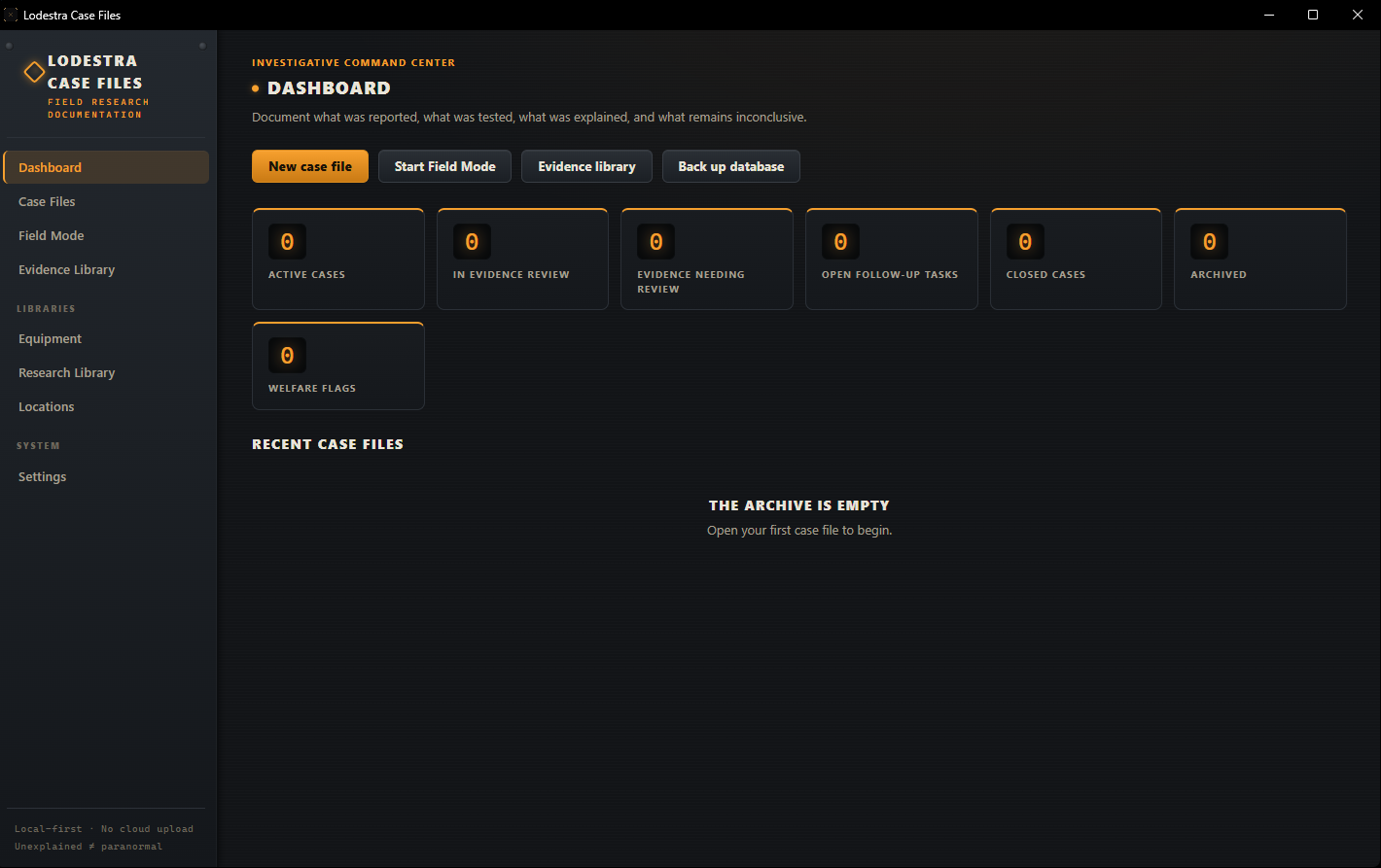
Case Management Software
Our case management tools help investigators organize client details, witness accounts, location history, room-by-room notes, evidence files, debunks, conclusions, and reports in one structured place.
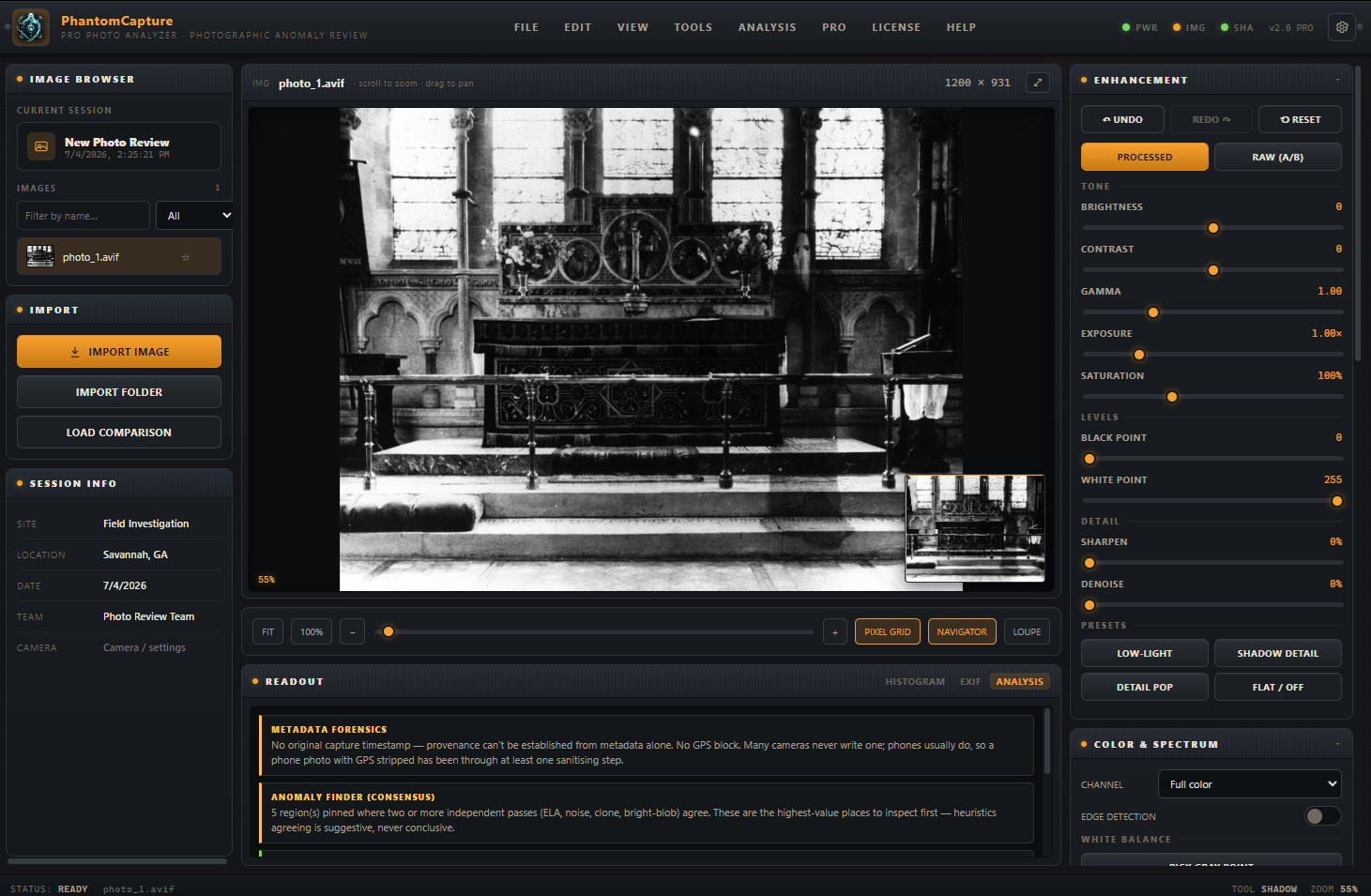
Photo Analysis Tools
The PHO-1 Photo Analyzer gives investigators a more structured way to review paranormal photos, inspect metadata, zoom into questionable areas, compare original and enhanced versions, tag possible anomalies, and export a grounded photo evidence report.
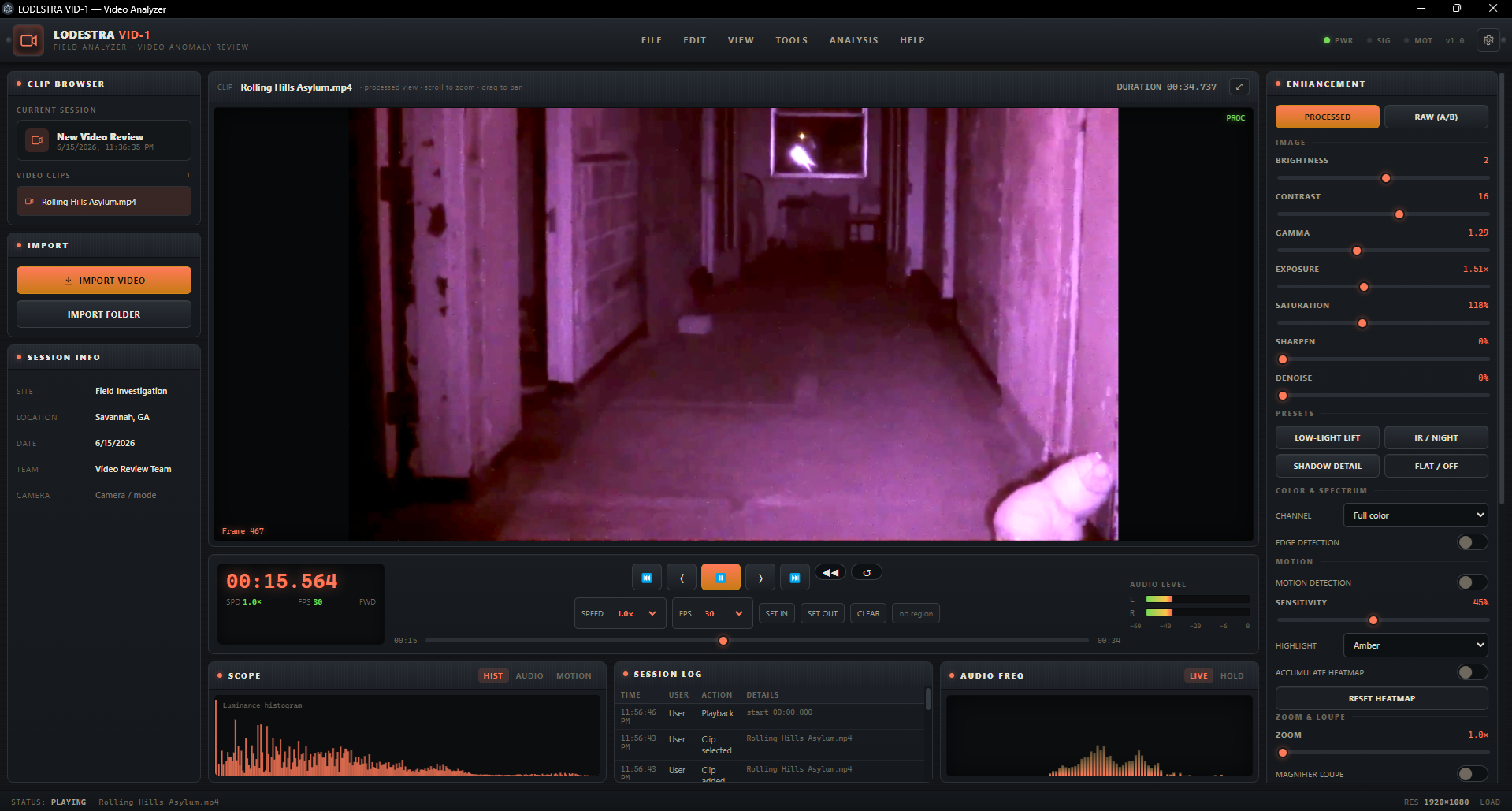
Video Review Tools
The VID-1 Video Analyzer helps investigators review footage frame by frame, tag events, run motion analysis, compare original and enhanced footage, and document possible anomalies with more clarity.
Photo Analysis Tools
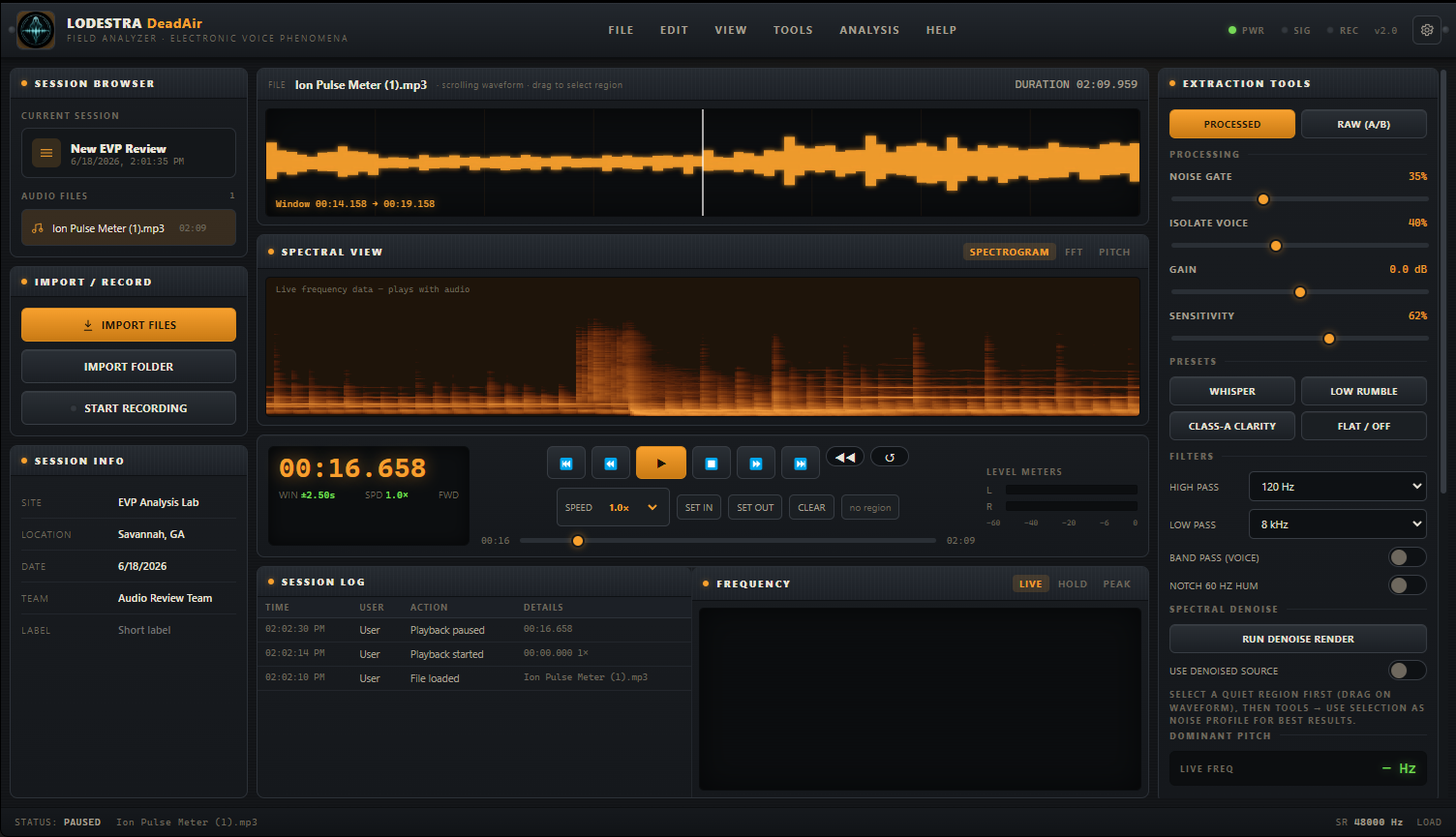
Audio Analysis Tools
The EVP-1 Audio Analyzer is built for reviewing audio and EVP sessions with more control, including waveform review, spectral view, tagging, classification, noise reduction, and report export.
Mapping and Field Tools
Upcoming tools like MAP-1 Location Mapper are designed to help investigators create cleaner location maps, mark evidence points, document room layouts, and export visual investigation maps for reports and case files.
Our Approach
Lodestra is built around a simple idea:
Investigate the unknown, but document it like it matters.
That means we care about:
Original files
Investigators should be able to compare enhanced evidence against the original source.
Clear notes
Every important observation, tag, and event should be easy to find later.
Grounded reports
Evidence should be presented clearly, without exaggeration or forced conclusions.
Field usability
Paranormal tools should work for real investigators in real locations, not just look good in a demo.
Better organization
The entire case should be easier to manage, from the first report to the final export.
The Future of Paranormal Investigation
Lodestra is more than a software brand. It is a growing investigation suite built for the future of paranormal research.
We are developing tools for case files, audio, video, photo analysis, location mapping, field reporting, and research organization. As the platform grows, our goal is to give investigators a connected set of tools that makes the entire process cleaner, smarter, and more useful.
The paranormal field does not need more noise.
It needs better methods.
It needs better records.
It needs better tools.
Lodestra
Built for the evidence others miss.
For ghost hunters.
For paranormal researchers.
For investigators who do not just believe, they document.
Meet the Lodestra Team
Chris
Lodestra was founded by Chris Allen, a lifelong paranormal researcher, historian, and field investigator whose interest in the unexplained began at an early age. After growing up in a haunted house, Chris became fascinated by the strange overlap between personal experience, local history, folklore, and the evidence investigators collect in the field.
In 2000, he co-founded the Paulding Paranormal Society in Paulding County, Georgia, one of the longest-running ghost hunting groups in the state. What began as a personal search for answers grew into more than two decades of hands-on investigation, historical research, and public education.
Chris has spent over 20 years investigating some of the most documented paranormal locations in the country. As the founder of Destination Ghost Tours, established in 2010, his work has taken him from the Deep South to haunted locations across the United States, blending serious historical scholarship with real-world paranormal fieldwork.
His approach is grounded, curious, and evidence-focused. He does not believe every shadow is a ghost or every sound is an EVP, but he does believe every investigation deserves better documentation, better tools, and a more thoughtful way to examine the unknown.
That experience is what led to Lodestra.
Built from the needs of real investigators, Lodestra reflects Chris Allen’s belief that paranormal research should be exciting, but also organized, careful, and honest. The goal is simple: give ghost hunters and paranormal researchers the tools they need to document the evidence others miss.
Billy
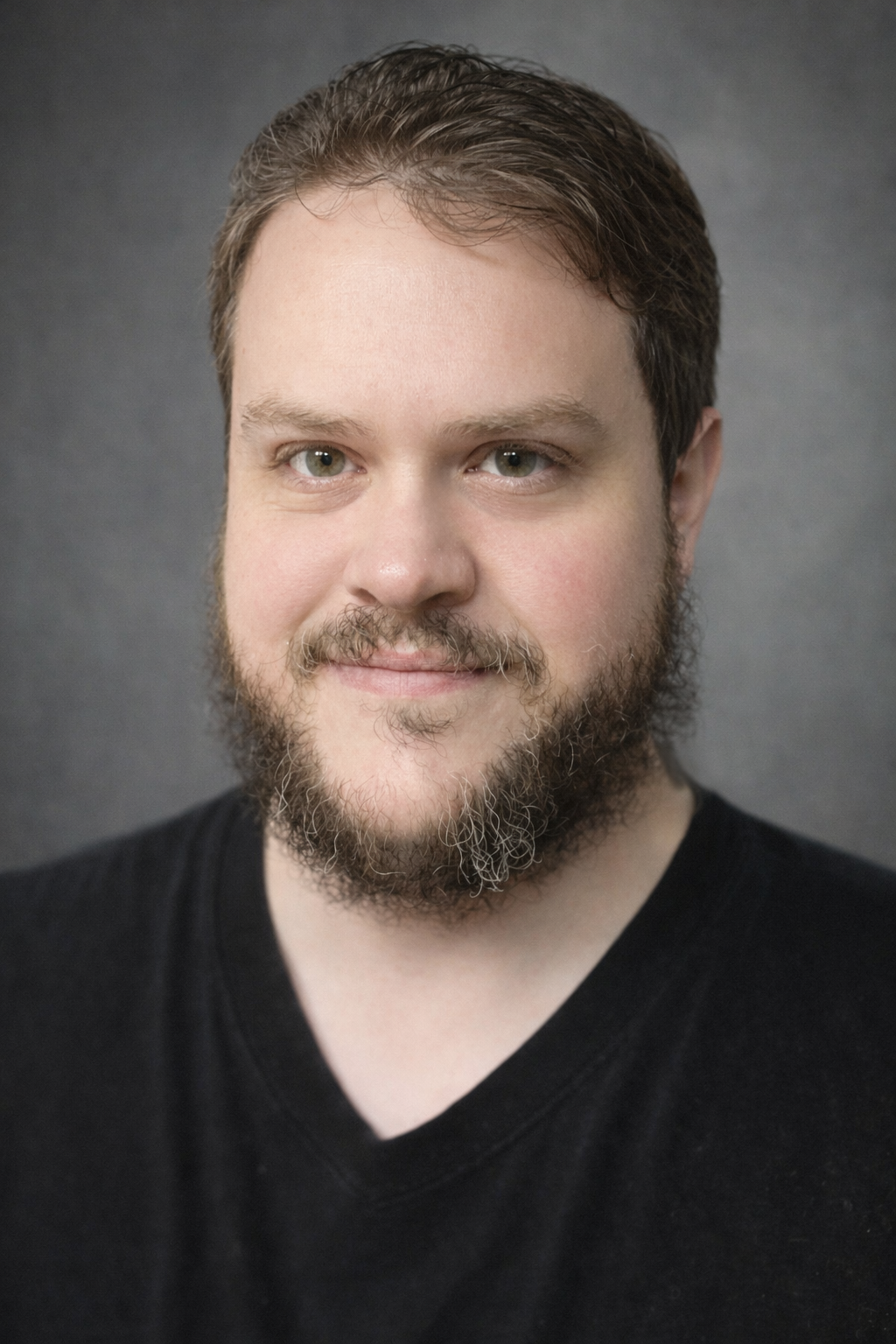
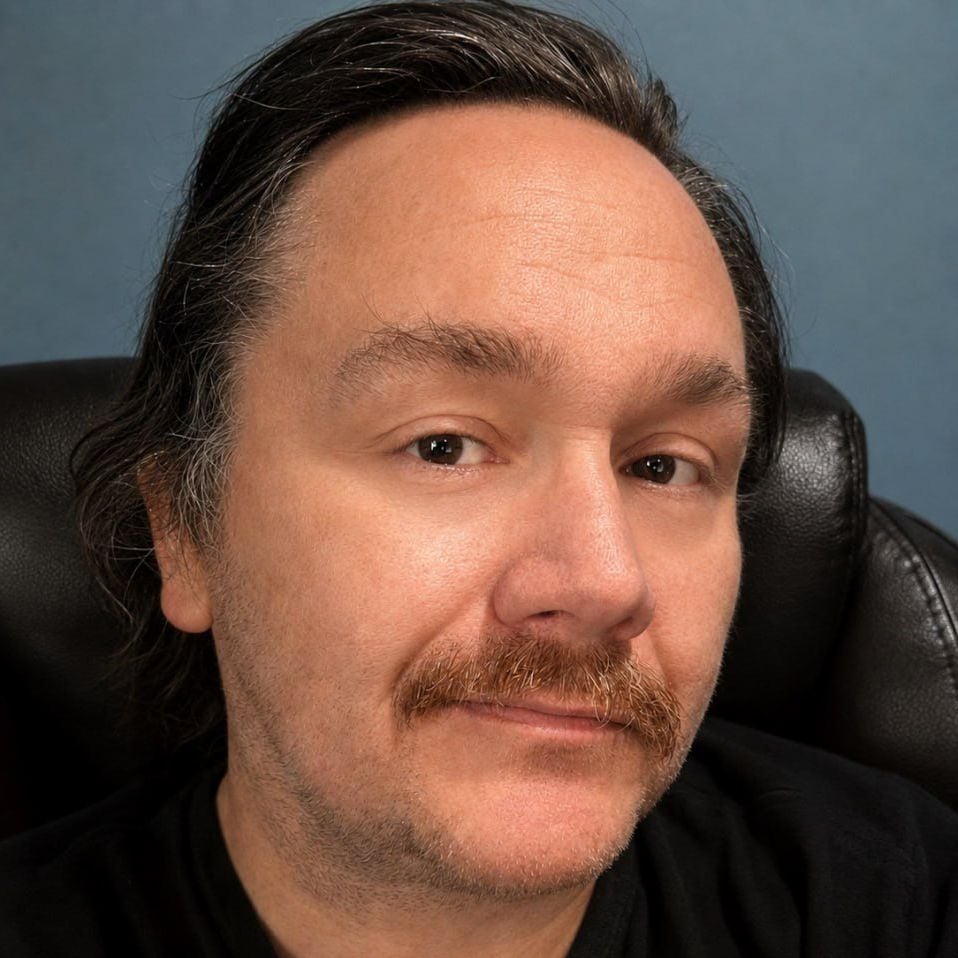
Billy is the co-founder of the Paulding Paranormal Society, established in 2000, and a longtime paranormal investigator with more than two decades of field experience. He is also a senior software engineer, app developer, and filmmaker whose work has helped document and advance paranormal research in both technical and public-facing ways.
Billy produced two theatrically released paranormal films, Verifiable Evidence and Verifiable Evidence 2, both of which are now available on YouTube. These projects helped bring real-world paranormal investigation to a wider audience and reflected his long-standing commitment to evidence-driven research.
At Lodestra, Billy brings together practical investigation experience, software engineering, app development, and media production. His work helps bridge the gap between traditional field investigation and modern digital tools, supporting Lodestra’s mission to build intelligent, investigator-focused technology for the paranormal field.
With deep experience in both code and casework, Billy plays an important role in shaping tools that are powerful, practical, and grounded in real investigative needs.
Ris
Ris is an IT professional, paranormal investigator, software and web coder, and hardware engineer whose work brings a strong technical backbone to Lodestra. With experience across digital systems, coding, web development, and hands-on hardware design, she helps support the practical engineering side of modern paranormal research.
At Lodestra, Ris brings together field investigation experience and technical problem-solving. Her background allows her to approach paranormal tools from both perspectives: what investigators actually need in the field, and how to build systems that are reliable, usable, and grounded in real-world conditions.
From software and web coding to hardware development, Ris contributes to Lodestra’s mission of creating smarter, more capable technology for paranormal investigators. Her work helps bridge the gap between traditional investigation methods and modern technical innovation, making her an important part of Lodestra’s research and development team.