
Famous Locations · History & Folklore
The Cecil Hotel
A grounded look at one of Los Angeles' most infamous hotels — history, stories, ghosts, and legends
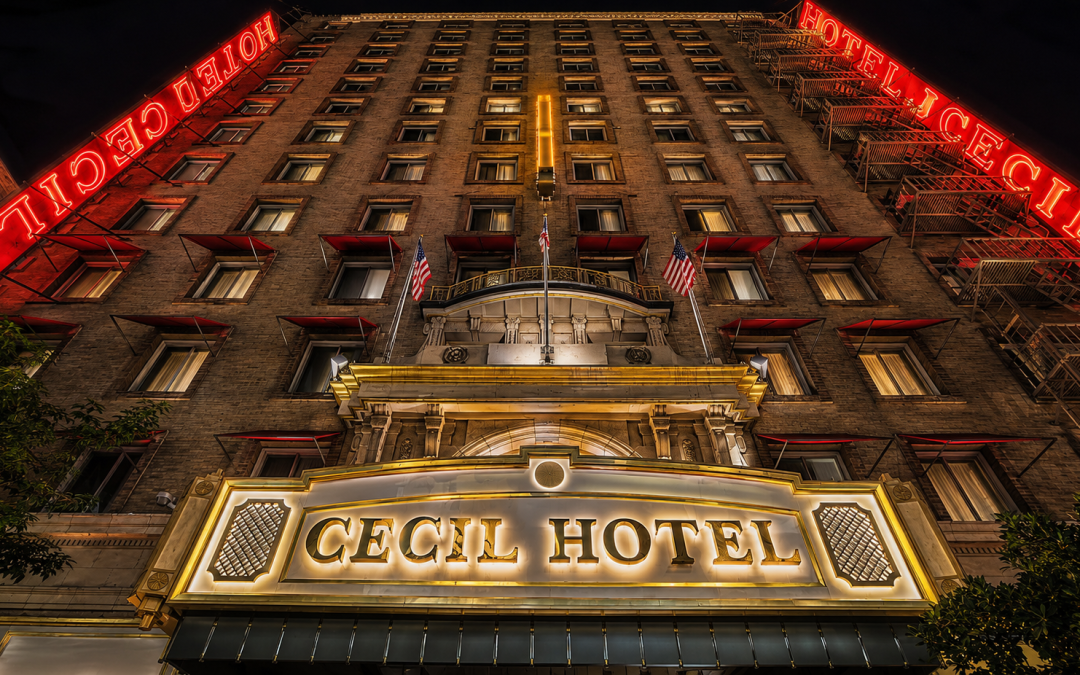
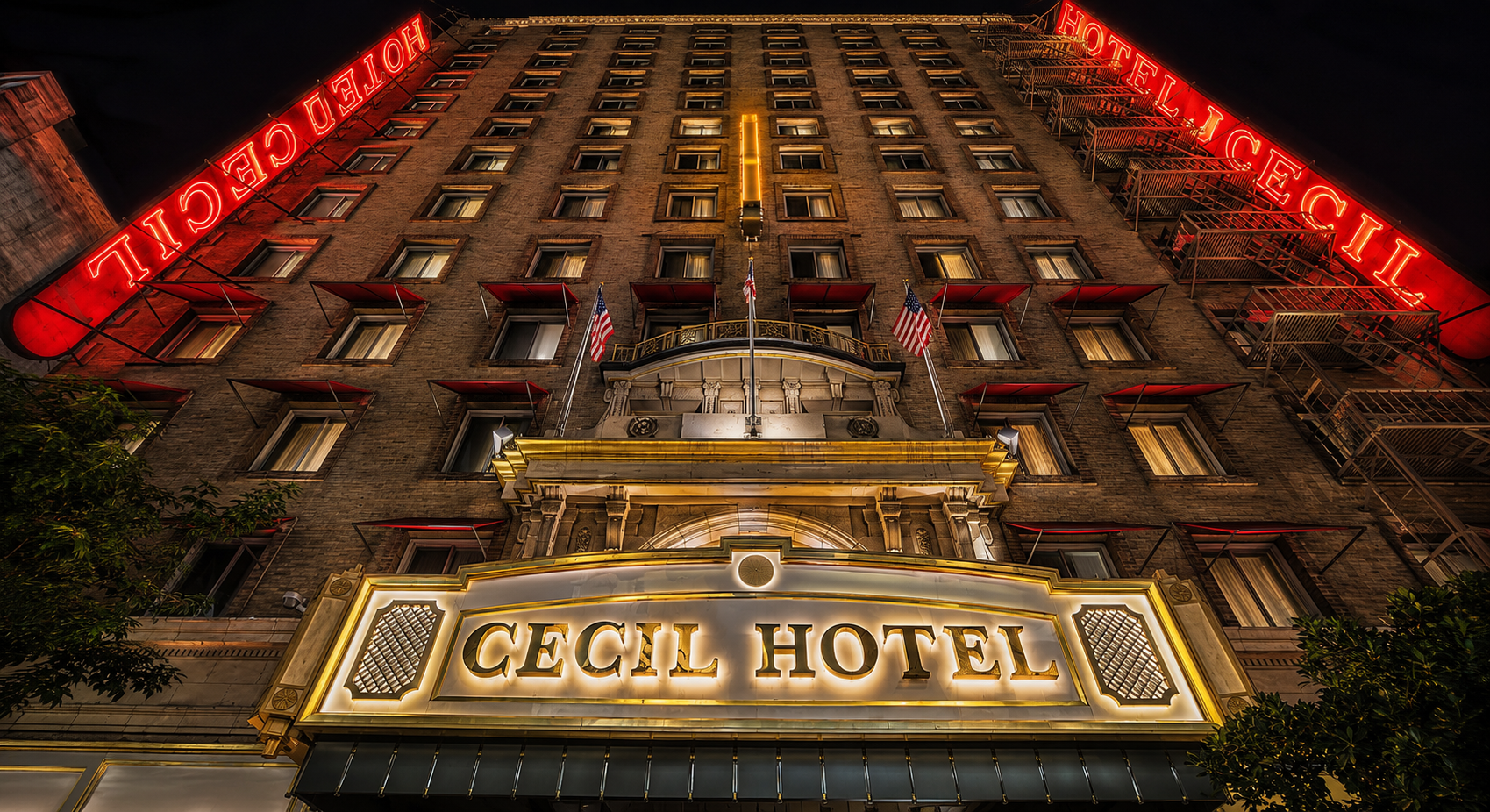
The Cecil Hotel in downtown Los Angeles has become one of the most discussed "haunted hotels" in America, not only because of ghost stories, but because its documented history already contains enough tragedy, crime, poverty, death, and urban legend to feel almost mythic without embellishment. Opened in 1924 at 640 South Main Street, the Cecil began as a large early twentieth-century hotel for business travelers and tourists, but over the decades its identity changed with the city around it.
Today, the building is no longer operating as a conventional hotel. It was converted into affordable housing and reopened in 2021 as a housing complex for low-income and formerly homeless residents. That distinction matters. The Cecil is not simply a spooky backdrop. It is a real building in a real neighborhood, tied to real people, real deaths, and real social conditions. A responsible look at the Cecil has to separate what is documented from what is rumored, and what is folklore from what can be stated as fact.
A Grand Beginning in 1920s Los Angeles
The Cecil Hotel opened during a period when downtown Los Angeles was booming. Designed by architect Loy Lester Smith, the building is recognized by the City of Los Angeles as an example of Beaux Arts commercial architecture — an "excellent example" of 1920s downtown hotel architecture. It was built with hundreds of rooms and a grand lobby, reflecting the optimism of an era when Los Angeles expected to attract businesspeople, tourists, and visitors to a fast-growing city.
Then came the Great Depression. Like many hotels in downtown Los Angeles, the Cecil's fortunes shifted as the economy worsened and the character of the surrounding area changed. By the 1930s, it had already become associated with suicides. This is an important part of the Cecil story because it shows how the hotel's reputation did not appear overnight. It was not created by a single death, a single crime, or a single ghost story. It accumulated slowly, decade after decade, as the building changed from a grand lodging house into something more complicated.
A Hotel Changed by Its Neighborhood
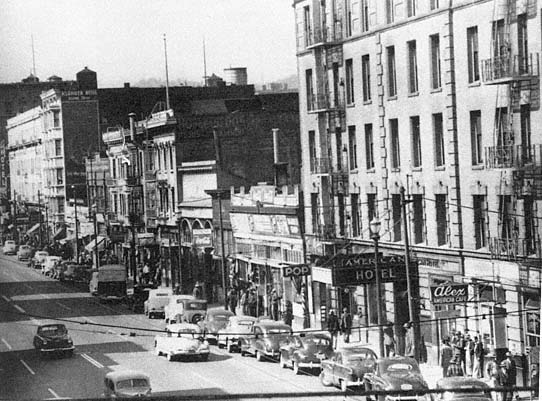
The Cecil stands near Skid Row, an area of Los Angeles long associated with poverty, homelessness, single-room occupancy hotels, addiction, mental illness, and social neglect. By the second half of the twentieth century, many downtown hotels that had once served travelers became lower-cost residential spaces. The Cecil followed this broader pattern — functioning less like a traditional hotel and more like single-room rentals, serving a largely transient population.
Many popular articles frame the hotel as if it were somehow cursed, but the more grounded explanation is that the building sat at the intersection of several forces: economic depression, urban decline, poverty, cheap lodging, untreated mental illness, crime, and social invisibility. That does not make the stories less tragic. It makes them more human. Its hallways held tourists, workers, drifters, residents, people in crisis, and people who were trying to disappear. Hotels that house people living unstable or desperate lives carry a different emotional weight than those built for leisure travelers — and that weight is exactly the kind that generates lasting ghost lore.
Deaths, Suicides, and the Birth of "Hotel Death"
The Cecil's nickname "Hotel Death" did not arise from one event. It came from the accumulation of reported deaths, suicides, accidents, murders, and infamous associations over many decades. What can be said responsibly is that the Cecil has been connected to numerous deaths and violent or unusual incidents over the course of its history. Some cases became part of the hotel's documented criminal history, while others entered the realm of repeated local lore.
One of the most frequently mentioned murders connected to the Cecil is the 1964 killing of "Pigeon Goldie" Osgood, a retired telephone operator known for feeding birds in nearby Pershing Square. She was found dead in her room at the hotel. The killing remains part of the Cecil's grim history and is often cited as one of the building's most notorious unsolved crimes. A building does not need a literal curse to become haunted in the cultural imagination. Sometimes repeated suffering is enough.
Richard Ramirez and the Night Stalker Connection
One of the most infamous names associated with the Cecil Hotel is Richard Ramirez, the serial killer known as the Night Stalker. Ramirez terrorized Southern California in the mid-1980s through a series of home invasions, assaults, and murders. The Cecil is widely reported to have been one of the places he stayed during that period. This association became one of the major reasons the hotel's reputation expanded beyond Los Angeles. The idea that a serial killer could return to a cheap downtown hotel after committing crimes is chilling because it turns the hotel into a kind of anonymous refuge.
The Anonymity Factor
The hotel did not create Ramirez. It did not cause his crimes. But its low-cost, anonymous environment made it easy for people to imagine how someone like him could pass through unnoticed. The door closes, the room number replaces the name, and the person inside becomes unknowable. That anonymity is central to many haunted hotel legends — and it is one reason the Cecil's ghost stories feel different from those attached to more openly public historic buildings.
Jack Unterweger and the International Crime Connection
The Cecil has also been linked to Austrian serial killer Jack Unterweger. Convicted of murder in Austria and later released, Unterweger traveled internationally and came to Los Angeles in 1991, where several women were killed. He reportedly stayed at the Cecil during that time. Two notorious killers, from different backgrounds and different eras, were tied to the same hotel. That fact alone was enough for writers, filmmakers, ghost tour guides, and internet communities to attach a darker aura to the building.
A large, cheap, anonymous urban hotel has always attracted a wide range of people, including people hiding from the law and people passing through under false pretenses. The Cecil's horror lies not in a paranormal certainty, but in the uncomfortable fact that anonymity can shelter almost anyone.
The Elisa Lam Case
No modern event shaped the Cecil Hotel's reputation more than the death of Elisa Lam. Lam was a 21-year-old Canadian student traveling in California when she checked into the Cecil in January 2013. After she failed to check out and her family could not reach her, she was reported missing. Investigators reviewed surveillance footage — the most famous piece showed Lam behaving erratically inside a hotel elevator, pressing multiple buttons, stepping in and out, and appearing frightened or confused. The video spread widely online and became the center of intense speculation.
On February 19, 2013, after hotel guests complained of low water pressure and discolored water, a maintenance worker found Lam's body in one of the rooftop water tanks. Her death was ruled an accidental drowning, with bipolar disorder listed as a significant contributing factor. Investigators did not find evidence of a violent crime or injuries suggesting a struggle.
A Note on Responsible Reporting
The case remains one of the most discussed internet mysteries of the 2010s, but much of that discussion has been irresponsible. Lam was a real person with a family, a mental health history, and a tragic final chapter. Reducing her death to a puzzle, ghost story, or conspiracy does a disservice to the human reality of the case. The unanswered emotional questions are not the same as evidence of murder or the supernatural.
The Elevator Video and the Making of a Modern Legend
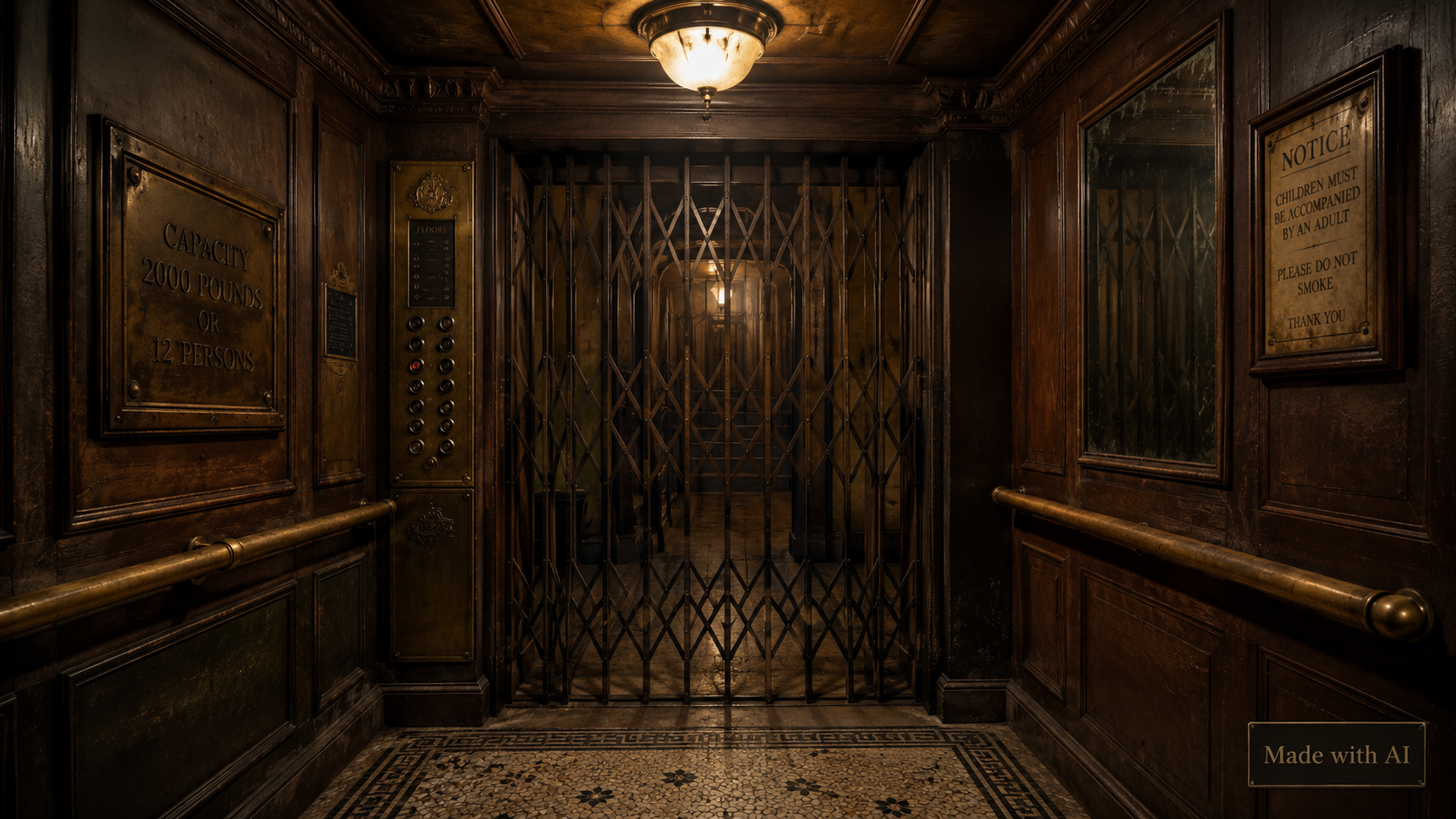
The elevator video became one of the defining images of the Cecil Hotel because it seemed to show a person caught between ordinary reality and something unknown — behavior that felt strange, frightening, and open to interpretation. Investigators and experts considered Lam's behavior consistent with a possible psychotic episode connected to bipolar disorder and possible underuse of prescribed medication. Authorities believed she may have reached the roof by way of the fire escape and climbed into the tank herself, later being unable to escape.
The hotel's reputation made alternative theories more attractive. If Lam had died in a modern chain hotel without the Cecil's history, the story likely would not have become the same kind of global legend. The Cecil gave the case a setting already loaded with symbolic darkness. That is how modern folklore often works: a documented event becomes attached to an atmospheric place, the place adds meaning, the internet adds theories, and over time the story becomes less about the person and more about the myth. A careful writer has to resist that pull.
The "Black Dahlia" Connection: A Cautionary Legend
One of the most repeated claims about the Cecil Hotel is that Elizabeth Short, known after her death as the Black Dahlia, was connected to the hotel. Short was found murdered in Los Angeles on January 15, 1947, in one of the city's most infamous unsolved cases. The supposed Cecil connection usually appears as a claim that Short visited the hotel bar shortly before her death, but this is difficult to verify and is often repeated in entertainment coverage rather than established historical documentation.
A Good Example of Orbit Legends
Once a place becomes infamous, stories begin to orbit it. Every Los Angeles mystery wants to be pulled into its gravity. The Black Dahlia connection is part of the Cecil's wider legend, but it remains questionable and should be treated with caution — not stated as fact. A responsible article should not claim Short stayed at the Cecil unless strong documentation is available.
Ghost Stories and Paranormal Claims
The Cecil Hotel is often called one of the most haunted hotels in America, but the evidence for specific ghosts is much thinner than the evidence for tragedy, crime, and urban legend. Many paranormal claims come from guest stories, online accounts, ghost-themed articles, and the building's reputation rather than verified investigations or documented apparitions. Common claims include shadow figures, strange noises, oppressive feelings, unexplained footsteps, elevator oddities, and reports of apparitions in hallways or windows.
These claims should be presented as reports and legends, not facts. The Cecil is the kind of building that naturally produces ghost stories. It has long corridors, many rooms, a history of deaths, a transient population, and a public reputation that primes visitors to expect something eerie. Sleep disruption, urban noise, old plumbing, elevator sounds, thin walls, stress, and suggestion could all contribute to experiences interpreted as paranormal. The mechanisms that make any hotel feel haunted are present here in concentrated form — the Cecil's ghost stories exist in a complicated space between belief, fear, environment, and memory.
Stay on Main, Rebranding, and Historic Designation
In 2011, part of the Cecil was rebranded as Stay on Main, intended to separate the budget hotel experience from the Cecil's darker reputation. Some guests booked without fully realizing the connection to the older identity. The rebrand did not erase the past. The building had two identities: the old Cecil with all of its history, and Stay on Main, a more modern name. By 2014 the hotel was sold, and plans were discussed to redevelop the interior while preserving historically significant components including the lobby. The building closed for renovation in 2017.
In 2017, the Los Angeles City Council voted to designate the Cecil Hotel as a Historic-Cultural Monument, based on its architectural significance as an early twentieth-century hotel and its association with architect Loy Lester Smith's body of work. This designation is important because it gives the building value beyond its grim reputation. The Cecil is not historically significant only because people died there. It is also part of the architectural and urban history of Los Angeles.
The Cecil Today
The Cecil reopened in December 2021 as affordable housing for formerly homeless residents. In 2024, the Los Angeles Times reported the building was up for sale through the transfer of a 99-year ground lease. Coverage of the building's recent years has also included serious concerns from tenants about living conditions, with residents reporting vermin and difficult conditions after it reopened as housing.
This modern chapter should not be ignored. The Cecil is not an abandoned haunted attraction. It is, or has recently been, housing for vulnerable people. Any paranormal or true crime interest should be balanced with respect for privacy, dignity, and the social issues connected to the property.
Why the Cecil Feels Haunted
Layer 01
Documented history
Decades of real deaths, crimes, suicides, and public tragedy that accumulated before any ghost story was attached.
Layer 02
Urban location
Proximity to Skid Row and the pressures of urban poverty gave the building a social weight absent from most haunted sites.
Layer 03
Criminal associations
Richard Ramirez and Jack Unterweger both reportedly stayed here during active killing sprees — connecting the building to true crime on two continents.
Layer 04
The Elisa Lam case
The elevator video transformed the Cecil into a global internet mystery, drawing millions of viewers into its orbit.
Layer 05
Architecture
Long corridors, many floors, old elevators, and a grand lobby create all the conditions haunted hotel lore relies on.
Layer 06
Media amplification
Horror entertainment, true crime documentaries, podcasts, and online storytelling turned the building into a symbol larger than itself.
The hotel that became a legend
The Cecil Hotel's reputation did not come from one ghost. It came from a century of accumulated unease. It began as a grand downtown hotel in 1920s Los Angeles, designed for travelers in a city full of ambition. The Great Depression, neighborhood decline, poverty, crime, serial killer associations, and the death of Elisa Lam all reshaped its identity. Over time, the Cecil became more than a building. It became a symbol of urban loneliness, anonymity, and the stories people tell when a place seems to have seen too much. Are there ghosts at the Cecil Hotel? That depends on what one means by ghosts. If a ghost is a proven spirit, the public evidence remains uncertain. If a ghost is a story that refuses to leave, then the Cecil is undeniably haunted — by its architecture, by its residents, by its dead, by its legends, and by the uncomfortable knowledge that some places do not need fiction to become terrifying.