
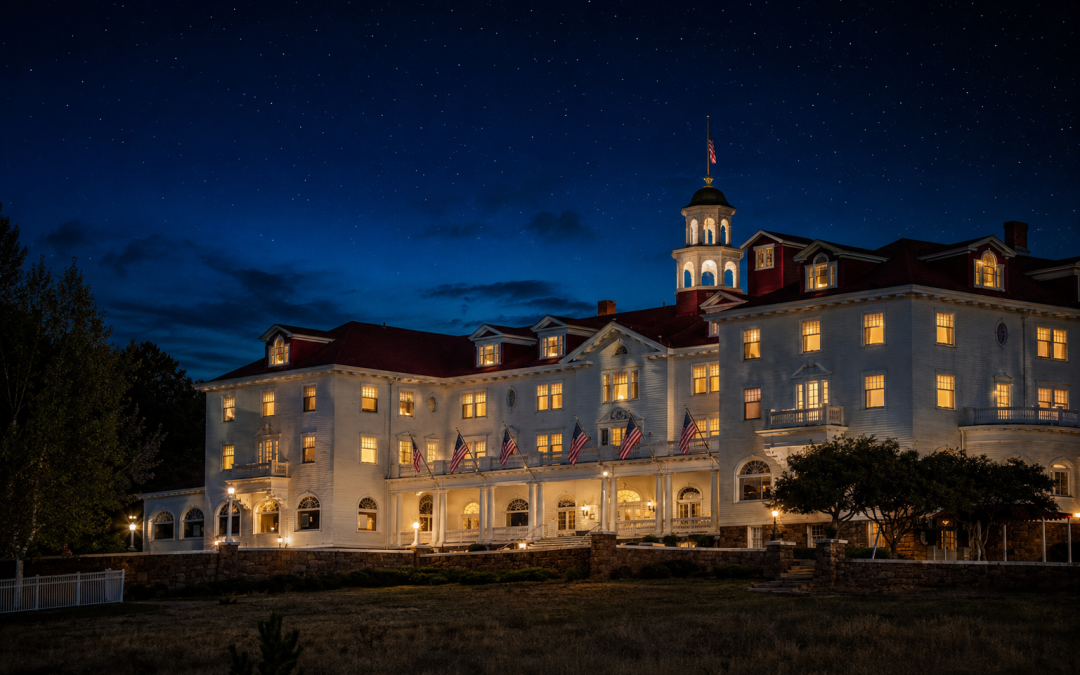
Paranormal Research · History & Folklore
Why Are Hotels So Often Haunted?
Transient guests, deaths away from home, emotional goodbyes, anonymity, architecture, and folklore passed from guest to guest
Hotels are strange places before anyone ever calls them haunted. A hotel room is private, but not personal. It is intimate, but borrowed. You sleep there, undress there, dream there, argue there, grieve there, hide there, celebrate there, and then leave. Someone else arrives after you. The sheets are changed. The towels are replaced. The room is reset to neutral.
But emotionally, people do not always reset so cleanly.
That is one reason hotels have become some of the most common settings for ghost stories. They are places of arrival and departure, secrecy and exposure, loneliness and celebration. People check into hotels for honeymoons, funerals, affairs, business trips, escapes, vacations, last chances, and final nights. They bring their lives with them, but only temporarily. Then they vanish into the next city, the next room, the next name on the reservation list.
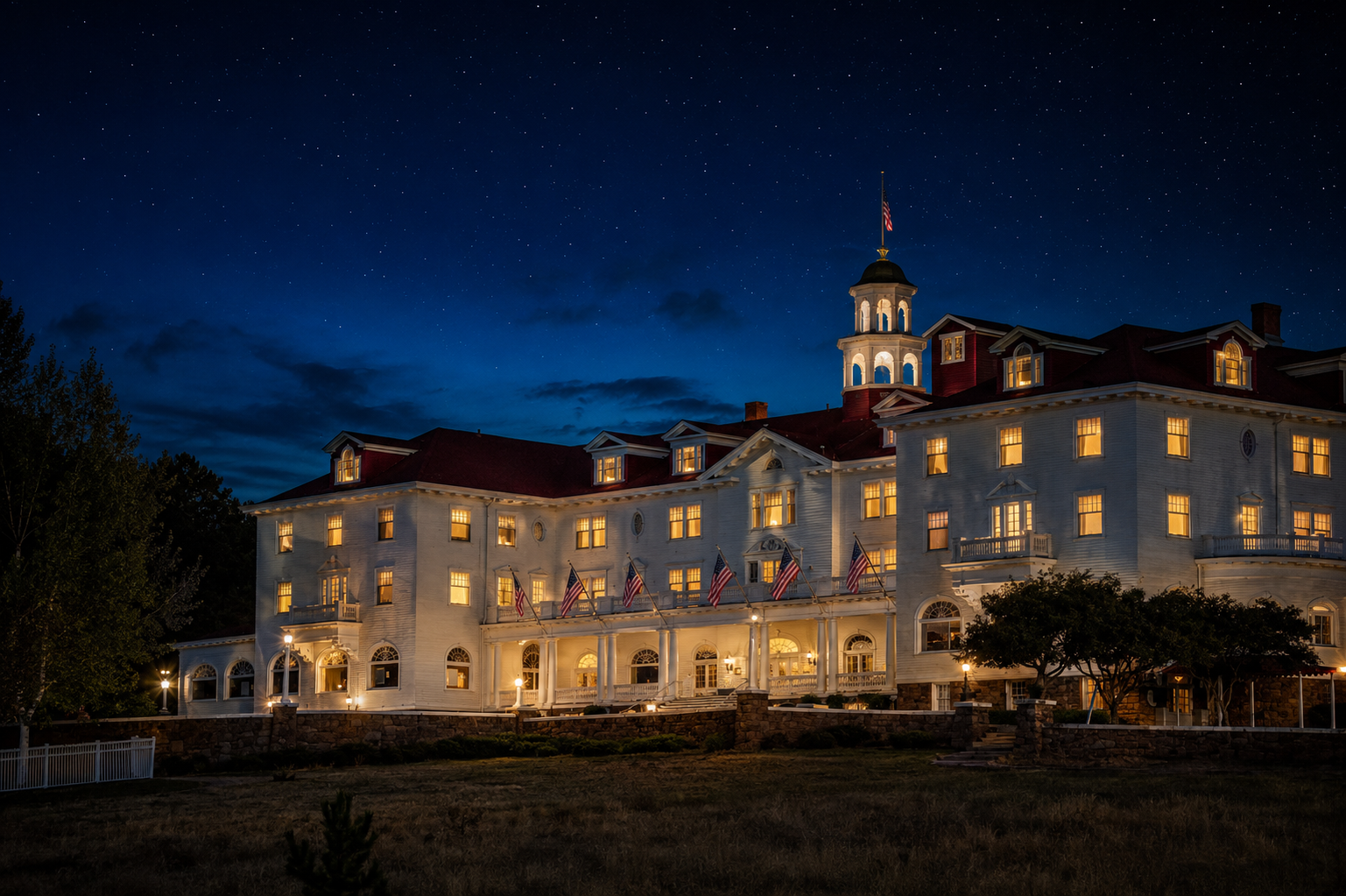
Haunted hotel stories are not simply about old buildings with creaking floors. They are about transition. A hotel is a threshold space — somewhere between home and elsewhere. Whether these stories are supernatural, psychological, folkloric, or some combination of all three, hotels are uniquely suited to producing them.
Hotels Are Built Around Transience
Most homes are designed around permanence. Hotels are designed around passing through. That difference shapes the stories told about them. A house haunting is often rooted in ownership, ancestry, family trauma, or domestic memory. A hotel haunting is different. It belongs to strangers. It has no single family narrative. Instead, it gathers fragments.
A guest checks in for one night. A traveling salesman stays for a week. A couple spends their honeymoon there. A mourner books a room after a funeral. A housekeeper enters rooms after guests have left and sees the evidence of private lives: flowers, medicine bottles, forgotten photographs, blood on a towel, a letter in the trash, a wedding dress hanging in the closet. Hotels create stories because they collect lives without keeping the people.
How Hotel Folklore Forms
If one guest says they heard footsteps in the hallway at 3 a.m., it may be dismissed. If another guest reports the same thing years later, the story gains weight. If a housekeeper quietly says "people complain about that room all the time," the legend grows. Hotels are ideal for this because their entire business model depends on repeated use of the same spaces by different people. Similar stories accumulate across strangers who never meet.
Death Away From Home
Many haunted hotel legends begin with death. Hotels have historically been places where people sometimes died away from their families, doctors, churches, and familiar surroundings. Travelers became ill. Fires broke out. People suffered heart attacks, accidents, overdoses, or suicides. Death in a hotel room carries a particular emotional charge: a person dying surrounded by rented furniture, wallpaper, a suitcase, and silence.
Hotel deaths also become vulnerable to rumor. A guest dies in Room 312. The details are not public. Staff members whisper. Future guests ask questions. Over time, uncertainty becomes narrative. "Someone died in this room" becomes "a woman died in this room," then "a bride died in this room," then "a bride still appears at the foot of the bed." Death in a hotel feels unfinished because the room was never meant to be a final place. It was meant to be temporary. That contradiction gives the story power.
Emotional Goodbyes Leave Strong Stories
Hotels are not only associated with death. They are associated with farewell. People stay in hotels during major life transitions: weddings, divorces, funerals, military departures, family reunions, hospital visits, secret meetings, cross-country moves. Some of the most important nights of a person's life happen in a room designed for strangers.
Ghost stories often grow where memory is strong but closure is weak. This is why hotel hauntings frequently feature figures tied to grief, longing, waiting, or repetition. A woman seen near a staircase. Footsteps crossing an empty room. A smell of perfume in a hallway. A child laughing when no children are checked in. A man at the end of the bar who disappears before anyone speaks to him. All of these may be interpreted differently — by believers, skeptics, folklorists — but they express the same theme: someone arrived, something happened, and part of the story never fully checked out.
Anonymity Makes Hotels Perfect for Ghost Lore
A hotel lets people become anonymous. At home, people are known. In hotels, they are room numbers, last names, credit cards, luggage tags, or faces passing through the lobby. They may tell the truth about themselves, or they may not. That uncertainty gives hotel stories a noir-like quality filled with unknown figures: the guest who never came down for breakfast, the woman seen walking the hallway at night, the man in old-fashioned clothes near the elevator.
Anonymity also affects how stories spread. Guests leave online reviews describing strange events. Staff tell stories privately. Tour guides preserve local legends. Owners may embrace the stories, ignore them, or market them carefully. The result is a layered tradition where the same haunting exists in several versions at once — one told by guests, another by employees, another by paranormal investigators, another by locals who remember the building before renovation. Hotel folklore checks in under many names.
Architecture: Long Hallways, Mirrors, and Empty Rooms
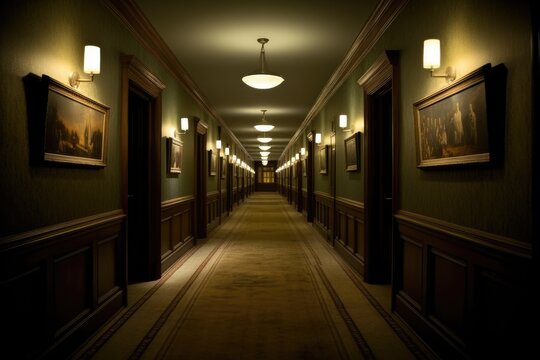
Hotels often feel haunted because they are architecturally suited to unease. Long corridors create expectation. Closed doors hide unknown occupants. Mirrors double the room. Elevators move people between floors without a sense of natural passage. Staircases echo. Pipes knock. Ice machines hum. In an unfamiliar hotel, ordinary sounds become harder to interpret. At home, you know the language of the building. In a hotel, the building speaks in a foreign dialect. Every sound has to be decoded.
Old hotels intensify this effect. Uneven floors, thick walls, sealed doors, narrow servant passages, old dumbwaiter shafts, and layers of renovation create disorienting layouts. A hallway may turn unexpectedly because two buildings were joined. A room may have a bricked-up fireplace. A staircase may lead to a locked floor. Architecture does not need to be supernatural to be powerful. The haunted hotel is often a sensory environment before it is a story.
Sleep, Stress, and the Unfamiliar Room
Many hotel ghost stories happen at night, often in bed or just after waking. Sleep researchers have long recognized that people often sleep differently in unfamiliar environments. The "first-night effect" describes reduced sleep quality and altered sleep patterns during the first night in a new place — a real, documented phenomenon. Hotels place people in exactly the conditions where strange nighttime experiences become more likely: unfamiliar rooms, unusual sounds, different beds, travel fatigue, alcohol, stress, jet lag, grief, or excitement.
Sleep paralysis, hypnopompic hallucinations, dream intrusion, and heightened alertness in unfamiliar surroundings can all produce vivid experiences that are deeply real to the person having them. Explaining possible mechanisms does not mean mocking the witness. A careful approach respects both sides: the sincerity of the report and the limits of interpretation. Over time, many such reports become part of the hotel's haunted identity.
Staff Stories Carry Special Weight
In many haunted hotels, the most compelling stories do not begin with guests. They begin with employees. Hotel staff see the building differently. Guests experience one room for one night. Staff experience the entire building repeatedly, often at strange hours. Housekeepers enter empty rooms. Maintenance workers access basements, attics, and service corridors. Security guards walk silent hallways after midnight. Because staff members know the normal sounds and rhythms of the property, their unusual reports often carry special weight in local folklore.
The Building's Memory
Hotels are communities behind the scenes. Staff members pass stories to one another: which rooms are difficult, which floors feel strange, which guests complained, which objects seem to move, which elevator opens by itself. Some stories remain private. Others eventually reach guests, ghost tours, books, or paranormal investigators. The staff becomes the memory of a building that most people only borrow.
Folklore Passed From Guest to Guest
Hotels are storytelling machines. A guest hears a story at check-in. They tell their partner. Their partner tells another couple at the bar. Someone posts about it online. A travel writer includes it in a list. A ghost tour repeats it. A future guest books the room because of the legend. That guest hears a noise at night and adds another layer. This is how folklore works. It is not static. It travels, changes, adapts, and responds to the people telling it.
Expectation is powerful. If a guest is told that a room is haunted by a woman in white, a glimpse of pale fabric in the mirror may become meaningful. If they are told nothing, the same moment may be forgotten. This does not mean all reports are false. It means stories shape perception. A haunted hotel legend may not provide scientific proof of ghosts, but it can reveal what people believe about death, place, history, and unfinished emotion. In that sense, haunted hotels are not only paranormal sites. They are cultural archives.
The Hotel Bar, the Lobby, and the Threshold
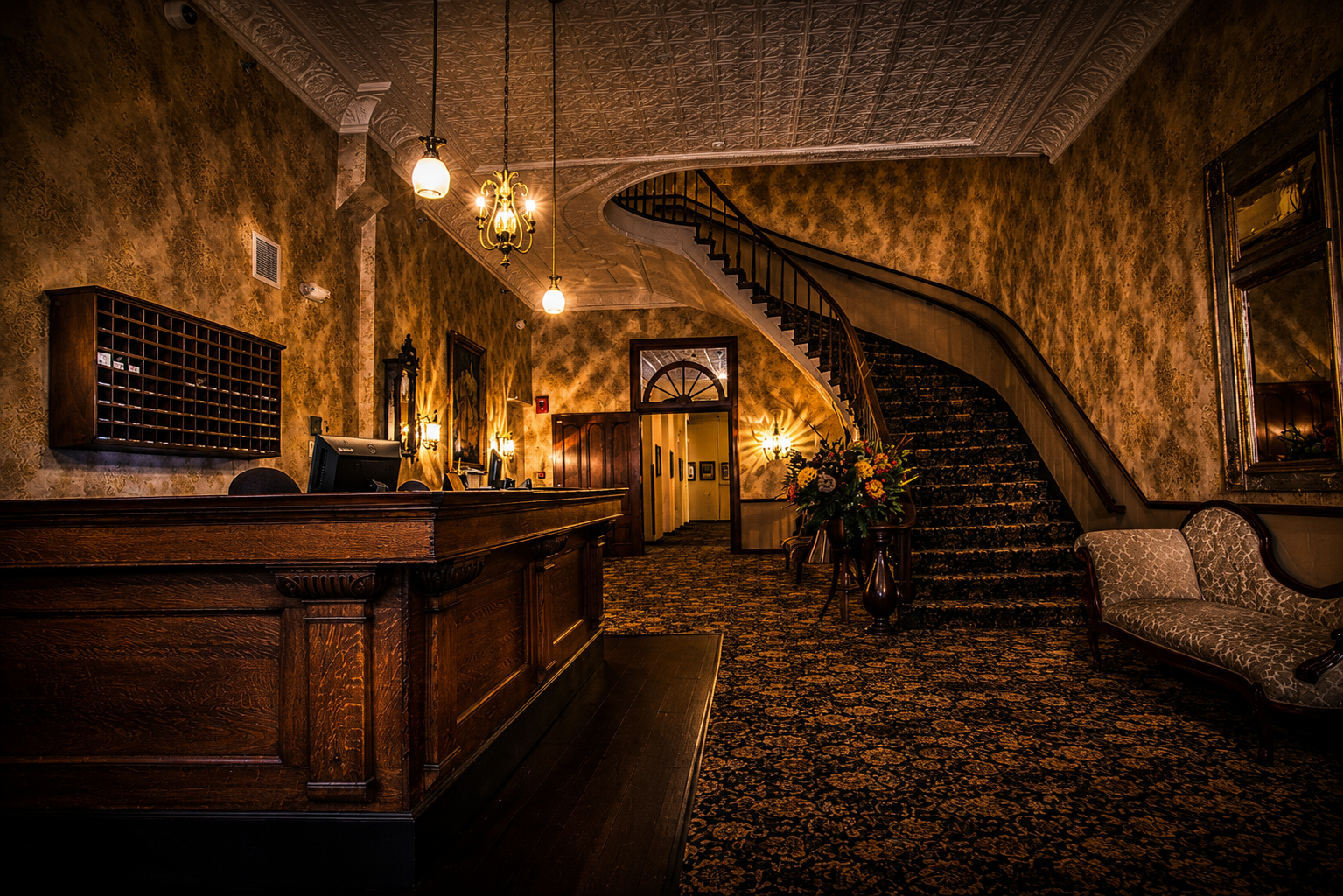
Some of the most haunted-feeling parts of a hotel are not the rooms. They are the shared spaces. The lobby is a threshold — people arrive there, wait there, meet there, break down there, ask for help there, and leave from there. The hotel bar is another kind of threshold, where strangers speak more freely than they might elsewhere. The staircase, elevator, and hallway are passage spaces, not destinations. Places between places.
In many traditions, liminal spaces are associated with uncertainty and transformation. Doorways, crossroads, bridges, and shorelines carry symbolic weight because they mark movement from one state to another. Hotels are filled with these in-between zones. A ghost, after all, is also an in-between figure: present and absent, remembered and forgotten, seen and doubted. The hotel and the haunting share the same structural condition.
Why Certain Rooms Become Legendary
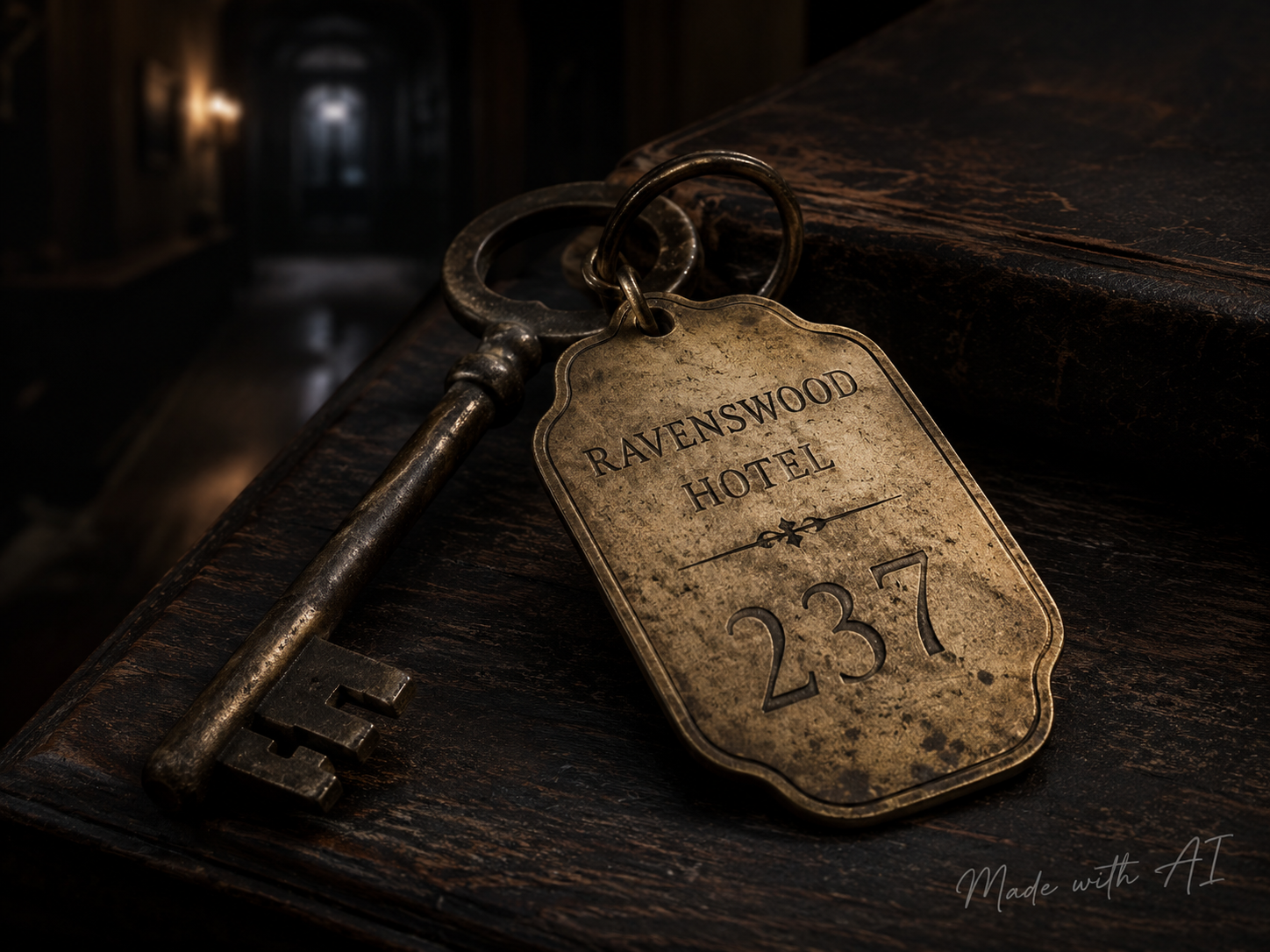
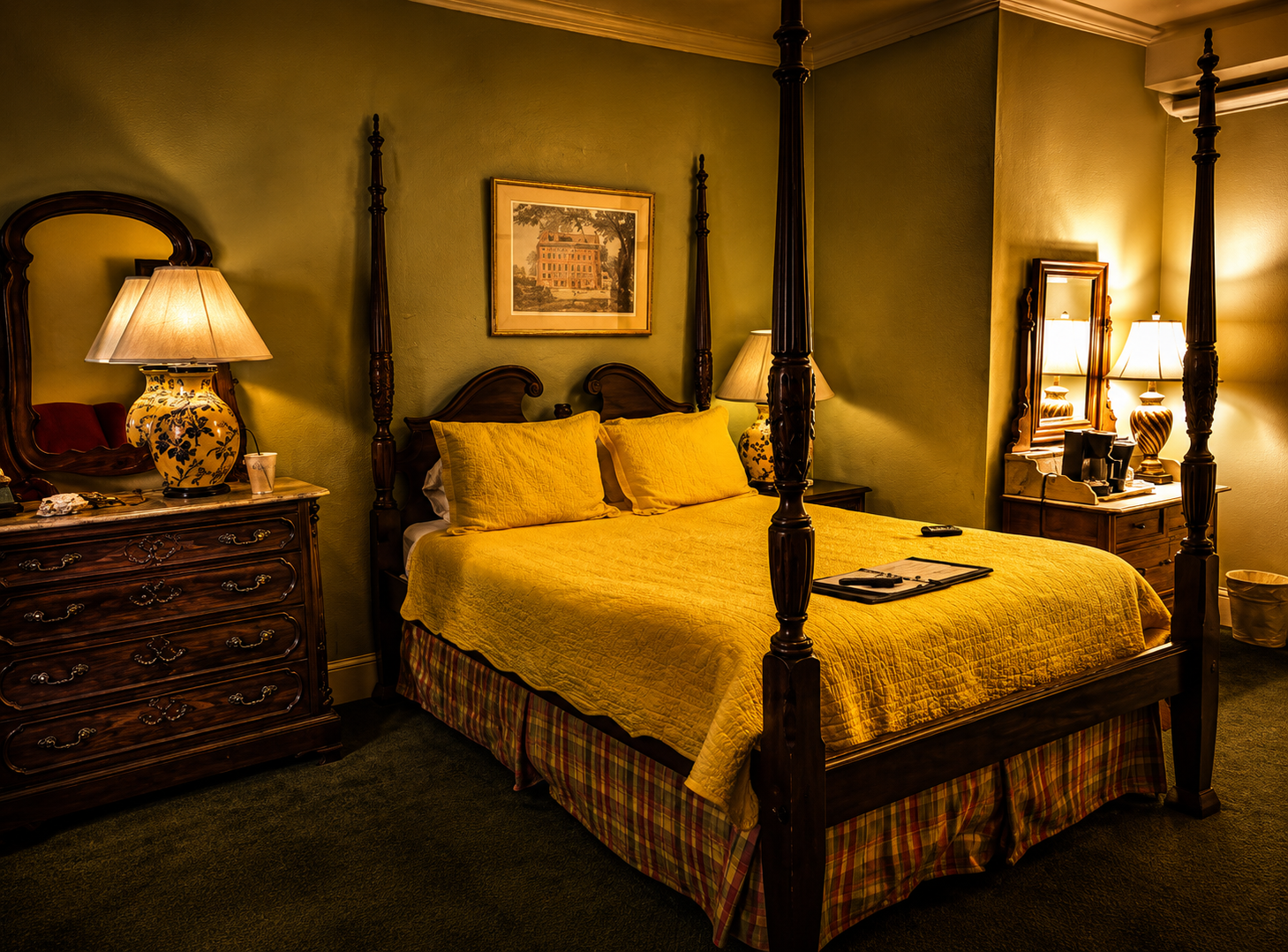
In haunted hotel lore, specific rooms often become famous. A room number gives a haunting a location. It turns atmosphere into destination. Instead of saying "the hotel is haunted," people say, "Something happens in Room 217," or "Do not stay in Room 428," or "Guests always ask about the room at the end of the hall." The room number functions almost like a character name.
Why do certain rooms attract stories? Several reasons are possible. A room may be connected to a documented event. It may have unusual acoustics, or sit near a service area, elevator shaft, or pipe. It may have been mentioned in a book, review, or television program. Once a room becomes known, more attention gathers around it. The legend becomes self-reinforcing. A haunted room is not only a physical space. It is a narrative space — and people enter it carrying everything they have already heard.
The Business of Haunted Hospitality
Some hotels avoid ghost stories because they fear frightening guests or damaging the brand. Others lean into them, offering haunted rooms, ghost tours, themed packages, and paranormal weekends. Many historic hotels occupy a middle ground: they acknowledge the stories while avoiding claims that cannot be proven. Commercialization can distort history. A vague report may become a dramatic tragedy. A documented death may be reshaped into a romantic legend. A real person's suffering may be turned into entertainment.
Responsible Language Matters
It is fair to say "guests have reported." It is fair to say "local legend claims." It is fair to say "the story is difficult to verify." It is not fair to invent deaths, identities, murders, or apparitions simply because they make the story more marketable. The strongest haunted hotel writing does not need exaggeration. Hotels are already strange enough.
Why We Want Hotels to Be Haunted
The final reason hotels produce so many ghost stories may be the simplest: we want them to. Not always consciously, and not always because we truly want to be scared. But haunted hotels give meaning to temporary places. They suggest that a room is not just a product, a bed, a rate, and a checkout time. They suggest that something lingers.
For travelers
Thrill and meaning
A ghost story transforms a generic room into a specific place with history, weight, and a story worth repeating.
For locals
Preserved memory
A haunted hotel keeps the past visible. It resists the erasure that renovation and rebranding can bring.
For staff
The building's personality
Ghost stories give shape to the inexplicable patterns staff notice over years of working in the same spaces.
For researchers
Cultural archive
Haunting legends preserve who passed through, what happened, and why certain stories survive when others disappear.
Hotels are haunted because they are full of human absence. Every room has just been left by someone. Every hallway leads to strangers. Every bed has held dreams no one recorded. Every lobby has watched people waiting to begin or end something.
The check-in desk of the unfinished
To ask why hotels are so often haunted is to ask why temporary places can feel so permanent in memory. Hotels are not empty containers. They are emotional crossroads. People pass through them during moments of fear, desire, exhaustion, escape, celebration, illness, and grief. Their architecture magnifies uncertainty. Their rooms are private but unfamiliar. Their histories are layered. Their staff preserve stories. Their guests carry legends from one generation of travelers to the next. A haunted hotel does not need exaggeration to be fascinating. The truth is already rich enough. The ghost may or may not be there. But the story almost always is — waiting behind the next closed door, beside the bed, at the end of the hallway, or quietly at the front desk, waiting for someone new to check in.