
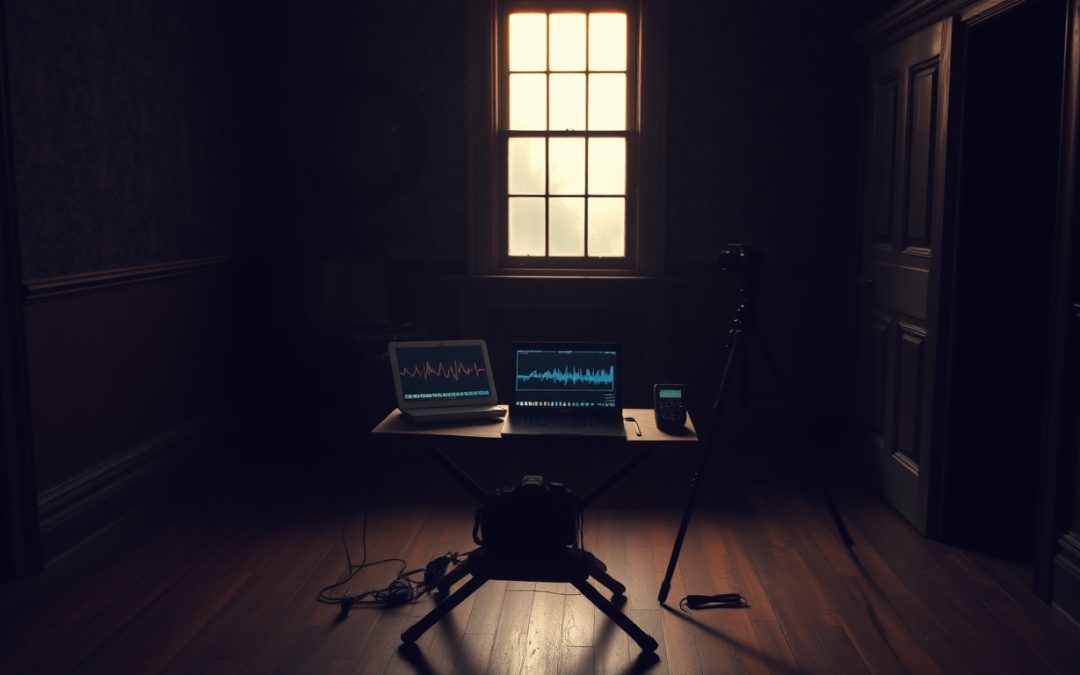
Most of the work in serious paranormal research happens before anyone steps through the front door. The investigation people imagine — sitting in a dark room, waiting for something to happen — is the least important part of the process. What separates careful work from wishful thinking is preparation: knowing the building, knowing the witnesses, knowing what “normal” looks like at that location, and having a system to capture and compare everything you record. Software won’t find a ghost for you. But it will keep you honest, organized, and far less likely to fool yourself.
This is where the Lodestra Razor earns its keep. Rule out the ordinary before you reach for the extraordinary. A well-planned paranormal investigation is really an exercise in eliminating mundane causes one by one — drafts, plumbing, electrical noise, settling timber, traffic vibration, suggestion — until you’re left with whatever genuinely resists explanation. Good tools make that elimination faster and more defensible. Sloppy notes and unlabeled files make it nearly impossible.
Let’s walk through how to prepare for an investigation the way a methodical field investigator would, and where software fits into each stage.
Start With the Case, Not the Location
Before you think about equipment, think about information. A paranormal investigation begins with a person reporting an experience, and that person’s account is your first and most valuable dataset. Rushing to a site with a bag of gadgets and no context is a common beginner mistake. You end up recording hours of footage with no idea what you’re looking for or where.
The intake stage is where you gather the raw material of the case:
- What exactly did the witness experience, and when?
- How many people were present, and did their accounts agree or diverge?
- Is the activity tied to a specific room, time of day, or event?
- What is the building’s age, construction, and history — verifiable history, not folklore?
- Are there medical, medication, or stress factors that might shape perception?
That last question matters more than newcomers expect. Fatigue, grief, carbon monoxide exposure, and certain medications can all produce vivid sensory experiences. A responsible investigator treats these as leading hypotheses, not insults to the witness.
Why a Structured Case File Beats a Notebook
A paper notebook is fine until you have three witnesses, two visits, forty audio clips, and a timeline you need to reconstruct six weeks later. Structured case management software keeps the whole investigation in one place. A tool like the Lodestra Case File Manager is built to hold the first client call, location history, room-by-room readings, evidence, and — critically — your debunks, so the case grows as a single coherent record instead of scattered files. When you sit down to write a conclusion, everything you logged is already connected.
The habit worth building here is logging your debunks as diligently as your anomalies. If you traced a “cold spot” to a gap under a door, write it down. Those ruled-out explanations are the backbone of credible paranormal research, and they’re the first thing a skeptical reader will look for.
Map the Environment Before You Trust It
You cannot rule out ordinary causes in a space you don’t understand. Old buildings are noisy in ways that have nothing to do with the paranormal. Ductwork carries voices between rooms. Water pipes knock. Floors that settled decades ago still shift with temperature. Passing trucks vibrate windows. Electrical wiring throws off fields that can spike an EMF meter and, at certain frequencies and intensities, may even affect how some people feel in a room.
Before an investigation, build a map of the site. Note the location of the electrical panel, the furnace, appliances, plumbing runs, and any equipment you place. Mark where the witness reported activity. Mark the drafts, the reflective surfaces, the windows that face a road. A dedicated mapping tool such as the SpecterGrid Location Mapper lets you build that layout, place equipment, and drop evidence pins where things happened, then export a clean visual for the case file. A map turns vague statements like “activity upstairs” into something you can test and cross-reference later.
Infrasound, EMF, and the Limits of Instruments
Two environmental factors deserve special attention because they’re frequently misread. Infrasound — sound below roughly 20 Hz, at the edge of human hearing — has been associated in some research with feelings of unease, pressure, and the sense of a presence. Fans, ventilation, and certain machinery can produce it. If a room consistently gives people “the creeps,” an environmental cause is worth ruling out before anything else.
Then there’s the EMF meter, the most misunderstood device in the field. An EMF meter measures electromagnetic fields. That’s all it does. It does not detect spirits, and a reading spike is not evidence of one — it’s evidence of a field, which almost always traces back to wiring, appliances, or the meter’s own sensitivity. Honest paranormal investigation means describing what your instruments actually measure and refusing to imply more. The value of an EMF survey during preparation is baseline-building: knowing where the fields already are so you can recognize what’s ordinary.
Build a Baseline You Can Compare Against
The single most useful thing software does for paranormal research is make comparison possible. An anomaly only means something against a known baseline. If you don’t know what a room’s normal temperature, sound profile, and EMF readings look like, you have no way to say a change is unusual.
During preparation and the early part of an investigation, do a walkthrough and record baseline data for each area: temperature, background audio, EMF readings, obvious light sources and reflections. Log it all in your case file, tied to specific rooms on your map. Later, when someone reports a temperature drop or a strange sound, you have numbers to check it against instead of a gut feeling.
Set Up Your Evidence Workflow in Advance
Nothing ruins an investigation faster than realizing afterward that you can’t tell which clip came from which room, or that you overwrote your original recording while “cleaning it up.” Decide your evidence workflow before you arrive, and let your analysis software enforce good habits.
Audio and EVP
Electronic voice phenomena — apparent voices captured on recordings that weren’t heard at the time — are among the most reported and most misinterpreted forms of evidence. The human brain is extraordinary at finding speech in noise, a bias called auditory pareidolia. Radio bleed, HVAC, digital compression artifacts, and stray whispers from the team all masquerade as EVP. That’s why the review process matters as much as the recording.
A dedicated review tool like the DeadAir Audio Analyzer Pro lets you import, isolate, slow, reverse, mark, and classify possible EVP events with a non-destructive workflow — your original file stays untouched. That last point isn’t a technicality. Keeping the raw audio pristine is what lets you, or anyone reviewing your case, go back to the source and check your work. Preparation here means setting your recorders’ levels, noting exactly when and where each recording starts, and tagging team members’ voices so you can rule them out during review.
Video and Photo
Video and photographs bring their own catalog of ordinary explanations: dust and insects lit close to the lens (“orbs”), lens flares, long-exposure smearing, reflections, and pareidolia in shadow and texture. Frame-by-frame review software such as the PhantomFrame Pro Video Analyzer lets you step through footage, enhance dark clips without altering the original, and run movement detection, keeping a RAW A/B comparison so every enhancement stays honest. For stills, a tool like the PhantomCapture Photo Analyzer lets you inspect metadata, compare original and enhanced versions, and tag questionable areas.
Metadata deserves a mention of its own. A photograph’s EXIF data records the camera settings, timestamp, and often more. Checking it during a paranormal investigation can immediately explain a “mysterious” blur as a slow shutter speed, or confirm exactly when an image was taken. It’s one of the quickest ways to close a case, and it costs nothing but attention.
A Simple Pre-Investigation Checklist
Here’s a practical sequence you can adapt for most cases:
- Interview first. Log the witness accounts, history, and any medical or environmental context in your case file.
- Research the location. Verify what you can about the building’s age and history. Separate documented fact from local legend.
- Map the site. Note power, plumbing, HVAC, roads, reflective surfaces, and reported activity zones.
- Plan equipment placement. Decide where recorders, cameras, and sensors go, and mark them on the map.
- Prepare your evidence workflow. Set up folders, naming conventions, and analysis software before you leave.
- Take a baseline. Record normal temperature, sound, and EMF for each area on arrival.
- Log debunks in real time. Every ordinary cause you identify is a result worth keeping.
Notice how little of this involves waiting for something dramatic to happen. That’s the point. The strength of a paranormal investigation lives in its preparation and documentation, not in a single startling moment.
What Software Can and Can’t Do
Let’s be clear about the limits, because overselling tools is a form of dishonesty. No software detects ghosts. No app confirms a haunting. What good paranormal research software does is organize information, preserve originals, enable comparison, and make your reasoning transparent to anyone who reviews the case. It reduces the two great enemies of the field: disorganization and self-deception.
A frame-by-frame analyzer doesn’t decide whether a shadow is anomalous — it lets you examine it carefully and, more often than not, identify the shadow’s ordinary source. An audio tool doesn’t prove a voice is a spirit — it helps you determine whether there’s even a clear signal there at all, or just noise your brain wanted to hear. Used honestly, these tools make you more skeptical, not less. That’s a feature.
Preparation Is the Investigation
If you take one idea from this into your next case, let it be this: rigorous paranormal research is built during preparation, not improvised in the dark. The interview, the map, the baseline, the workflow, and the honest logging of every mundane explanation you find — that’s the real work. When you’ve done it well, your final report can say something meaningful, whether that’s “explained” or “unexplained.” Both are legitimate outcomes when the process is sound.
If you want to see how these methods come together — the mapping, the evidence review, the case files that hold up to scrutiny — explore the field tools and research at Lodestra and bring more structure to your next investigation. The mystery worth chasing is the one that survives careful work.