
Case File · UAP / Abduction Claims
The Travis Walton Incident
A famous UFO abduction claim involving logging crew witnesses, disappearance, polygraph controversy, and cultural impact — November 5, 1975
Case Summary
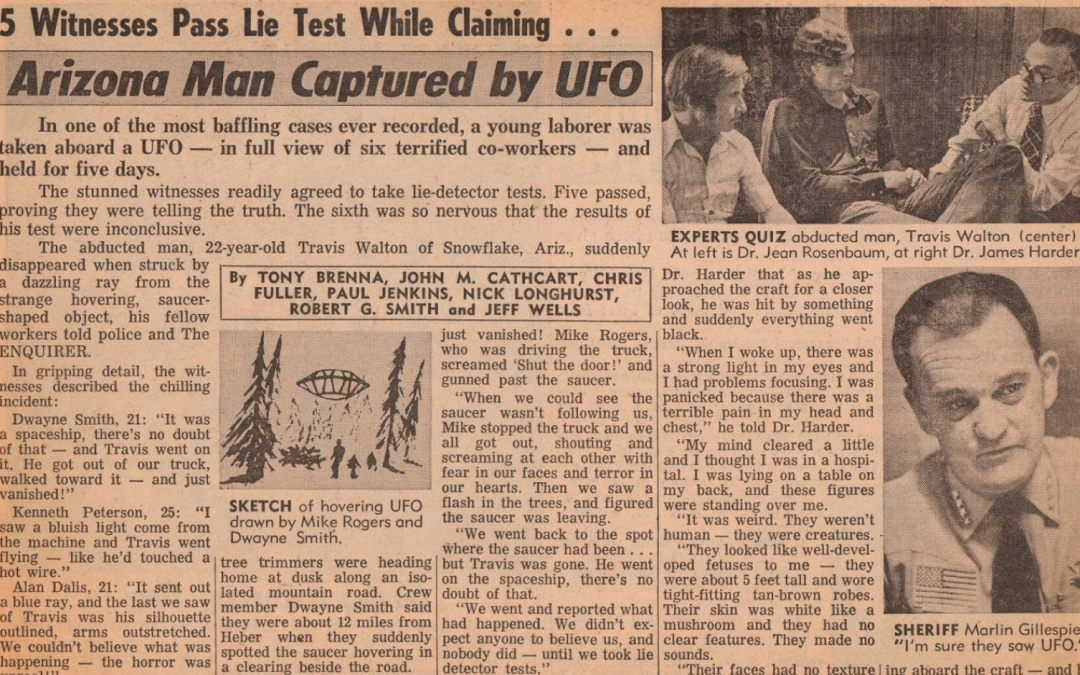
The Travis Walton incident remains one of the most famous alleged alien abduction cases in American UFO history. It has nearly every element that makes a case endure: multiple witnesses, a missing person report, law enforcement involvement, polygraph controversy, media attention, a later book, a Hollywood film, and decades of argument between believers and skeptics.
At the center is a young forestry worker who disappeared on November 5, 1975, after his logging crew reported seeing an unusual object in the Apache-Sitgreaves National Forest. According to the crew, Walton left their truck, approached the object, was struck or illuminated by a beam of light, and fell to the ground. The men fled in panic, later returned, and found Walton gone. Five days later, he reappeared and claimed he had been taken aboard a craft by nonhuman beings.
This is not a simple case. It is not enough to say "six men saw it, so it must be true." It is also not enough to say "alien abductions are unlikely, so it must be false." A proper case file has to separate what is known, what was claimed, what was investigated, and what remains uncertain.

The Setting: A Logging Crew in the Arizona Forest
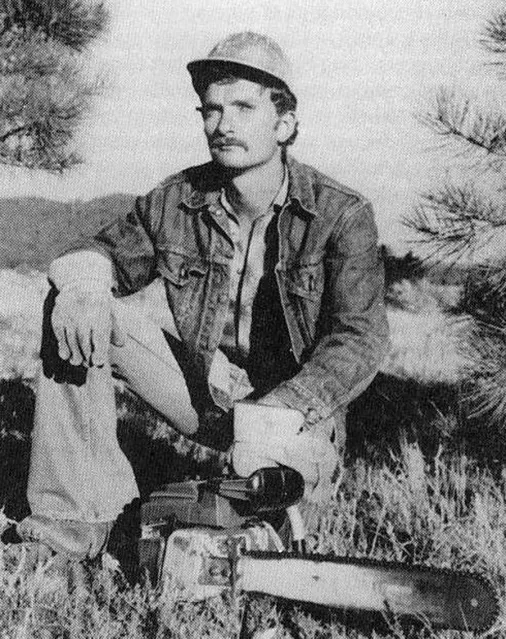
The setting matters. The incident occurred in a rural forest environment, far from controlled conditions. The men were forestry workers on a timber-thinning contract in the Turkey Springs area of the Apache-Sitgreaves National Forest. Their work involved long days, remote roads, and physical labor.
This detail later became important because skeptics argued that the crew may have had financial or contractual pressure related to the job. Critics suggested that a dramatic incident could have provided a way to explain delays or avoid penalties, though this remains part of the skeptical interpretation rather than an established legal conclusion.
The Crew's Account
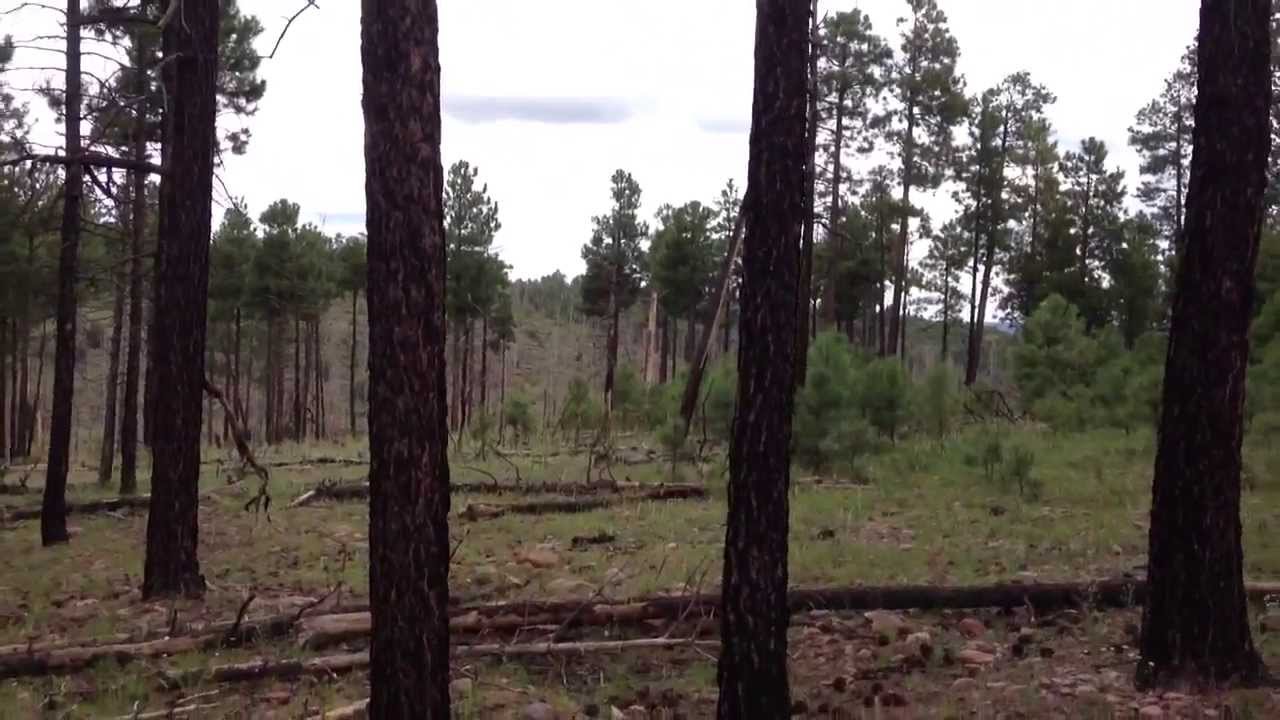
According to the commonly repeated version of events, the crew was returning from work after sunset when they saw a glowing object near the road or above a clearing. The object has often been described as disc-shaped. Walton reportedly left the truck and approached it, despite warnings or fear from the others. A beam or flash of light then struck Walton. He fell or was thrown backward. The men panicked and drove away.
After some distance, they returned to the location — but both Walton and the object were gone.
Evidential Weight of the Crew Testimony
From an evidential standpoint, this is the strongest part of the case. Multiple witnesses claiming to observe the same event is more difficult to dismiss than a single private misperception. However, the crew did not witness Walton aboard a craft. They claimed to see him struck, then found him missing. Walton alone provided the later abduction narrative. That distinction is essential.
The Missing Person Investigation
When the crew reported Walton missing, law enforcement had to consider the possibility that he had been injured, abandoned, or harmed. The UFO claim did not remove ordinary investigative concerns — in fact, it made the situation more suspicious to some authorities. Search efforts were organized, including a helicopter search of the area. Walton was missing for five days.
This part of the case is often overlooked by people who focus only on the UFO claim. The disappearance itself was real in the sense that Walton was absent and authorities were involved. The question is where he was during those days and why.
Believers argue that the crew had no reason to invite suspicion upon themselves by inventing such an extreme story. Skeptics respond that an outrageous story can sometimes serve as a distraction. Neither argument settles the matter. What it does show is that the case moved quickly from a local emergency into a public spectacle.
Walton's Return and Abduction Claim
After five days, Walton reappeared. He reportedly called his sister from a phone booth in Heber, Arizona. His condition was described as shaken in many accounts, and his return intensified public interest. Walton later claimed that after being struck by the light, he awoke in a strange room or chamber and encountered beings that he interpreted as nonhuman.
This is the part of the case that made it famous as an abduction story — and also the part that depends most heavily on Walton's personal testimony. No member of the crew could confirm what happened to him during the missing period. There were no publicly accepted medical findings proving extraterrestrial involvement. There was no recovered physical artifact establishing he had been inside a craft.
Walton's account may be sincere, fabricated, psychologically influenced, or a mixture of unusual experience and later interpretation. The case file must allow for those possibilities without pretending that the testimony alone proves the extraordinary claim.
Polygraph Tests: The Most Controversial "Evidence"
The Travis Walton case is often associated with polygraph tests, but the polygraph evidence is more complicated than popular summaries suggest. Supporters often point out that members of the logging crew passed lie detector tests. This has been used to argue that the witnesses were telling the truth about seeing a UFO and about not harming Walton.
However, the purpose and wording of the tests matter. In skeptical accounts, a key point is that law enforcement was concerned with whether Walton's coworkers had killed or injured him — not with proving an alien abduction. There was also controversy over Walton's own polygraph testing. Skeptical sources have claimed that an early test administered by examiner John J. McCarthy concluded Walton was being deceptive, and that this result was not emphasized in early publicity surrounding the case.
The Polygraph Problem
This does not automatically prove the case was a hoax. Polygraphs themselves are controversial and are not reliable scientific instruments for determining truth. Stress, fear, confusion, belief, deception, examiner bias, question wording, and physiological control can all affect results. But because the Walton case has often been defended using polygraph claims, the disputed polygraph history is important. The tests should not be presented as simple proof that the abduction happened.
The National Enquirer and the Media Problem
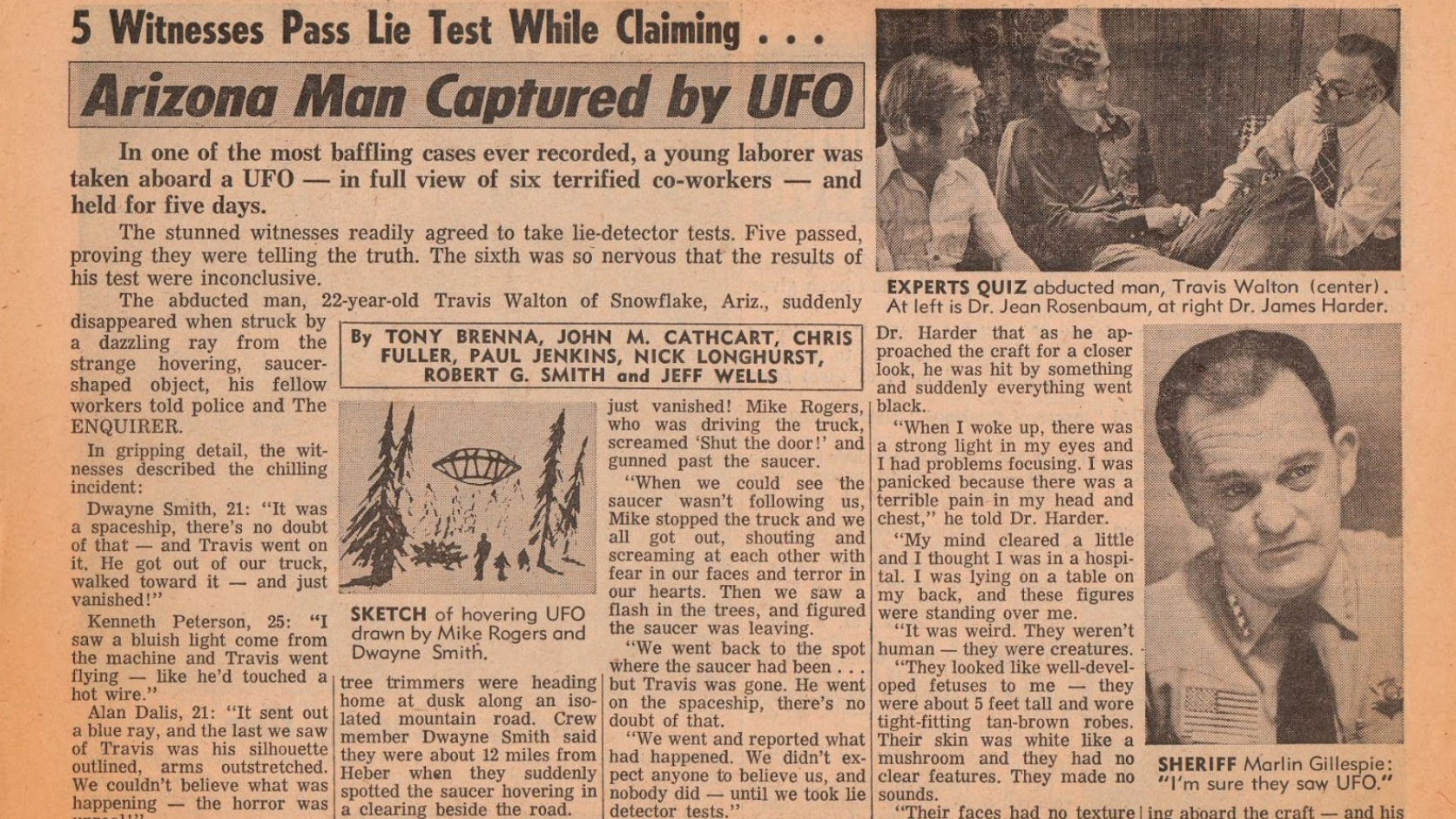
The involvement of the National Enquirer is one of the most important credibility issues in the case. The tabloid published Walton's story and awarded money connected to the case. Walton and the crew received a $5,000 prize for "best UFO case of the year."
This does not prove fraud. People with real experiences may still sell their stories. However, media incentives can affect how a case develops. Reporters want a dramatic narrative. Witnesses may become celebrities. Publishers may want a book. Once a case becomes valuable as media, every later version must be examined with caution.
Jeff Wells, a former National Enquirer journalist directly involved in the media handling of the case, later described the atmosphere surrounding Walton's return as chaotic, pressured, and commercially driven. His account portrays a situation in which sensational storytelling quickly overtook careful investigation.
The Skeptical Interpretation
Skeptics have generally argued that the Travis Walton incident was either a hoax or a misinterpreted event later turned into a profitable UFO story. One skeptical theory is that the crew had a motive connected to their logging contract. If they were behind schedule or facing financial problems, a dramatic event might have helped explain delays. This argument has been associated with skeptical investigator Philip J. Klass and others.
Another skeptical issue is the role of prior UFO interest. Some accounts suggest that people connected to the case had an existing interest in UFOs, which could have shaped interpretation. In more recent years, the case has also been affected by public disputes among people connected to it, including controversial statements involving Mike Rogers.
The skeptical case is not weak, but it has limits. Skeptics must still explain why several men told a highly unusual story during an active missing person situation and maintained key elements for many years. A hoax is possible, but proving a hoax requires more than showing that a hoax could have happened.
The Believer's Interpretation
Supporters argue that the case remains compelling because of the number of witnesses, the pressure placed on the crew, the missing person investigation, and the consistency of the central story over decades. From this perspective, the case is not merely Walton saying he was abducted. It begins with a group of men reporting a strange object and a terrifying event in the forest.
Supporters also argue that the crew had little to gain and much to lose at the beginning. They became suspects in a possible crime. They faced ridicule, law enforcement scrutiny, and public pressure. If they invented the story, they chose one of the strangest and riskiest explanations possible.
Important Distinction
The believer's argument is strongest when focused on the initial event, not on later cinematic versions. The group-witness claim is the core of the case. Walton's onboard experience is much harder to verify. Even if one accepts that the crew saw something strange, identifying that object as extraterrestrial remains a further step. "Unknown object" and "alien abduction" are not the same conclusion.
Fire in the Sky: When a Case Becomes a Film
The Travis Walton case entered mainstream popular culture through the 1993 film Fire in the Sky. The film was based on Walton's book, though it famously altered key parts of his abduction account for dramatic effect. The film's abduction sequence became one of the most memorable alien-abduction scenes in cinema, but it should not be treated as an accurate reconstruction of Walton's claimed experience.
Many people know the Walton case primarily through the film. For them, the emotional memory of the case is shaped by Hollywood imagery: invasive alien procedures, claustrophobic interiors, and horror-style visuals. Cinematic power is not evidence. Once a UFO case becomes a movie, the public often remembers the drama more vividly than the documentation.
Case strengths
- Multiple witnesses claimed to observe the initial event, not just the experiencer
- A real missing person investigation followed, with law enforcement involvement
- The crew faced immediate suspicion and scrutiny — complicating casual hoax theories
- Core story elements have remained relatively consistent over many decades
- The case is historically significant for studying how UAP claims are investigated and publicized
Case weaknesses
- No conclusive physical evidence of an extraterrestrial craft
- The onboard abduction account rests entirely on Walton's personal testimony
- Polygraph history is disputed; an early test reportedly showed deception
- National Enquirer money, publishing deals, and the 1993 film created strong commercial incentives
- Later dramatization in Fire in the Sky shaped public memory, not case documentation
Why the Case Still Matters
The Travis Walton incident reveals so many of the challenges that define UAP research. It shows the strength and weakness of witness testimony. Multiple witnesses can make a case more interesting, but testimony still requires context, timing, and independent evaluation.
It shows the danger of media involvement. Once money, publicity, tabloids, books, documentaries, and films enter a case, separating original events from later narrative becomes extremely difficult. It shows the problem of polygraph evidence — persuasive to the public, but not definitive. And it shows how UAP cases become folklore. Over time, the Walton incident became more than a report. It became a cultural object: a book, a film, a debate topic, and a symbol of alien abduction belief.
The question is not only whether Travis Walton was taken by a UFO. The deeper question is how extraordinary stories are born, investigated, challenged, commercialized, remembered, and transformed into modern myth. That may not answer the mystery. But it tells us why the mystery survived.
Researcher's Assessment
The Travis Walton incident is historically important, culturally powerful, and evidentially complicated. It is not one of the many UAP stories that can be dismissed as a single person seeing a light in the sky. The initial claim involved a logging crew, a missing man, law enforcement attention, searches, and a dramatic reappearance. That makes it worth studying.
At the same time, it does not provide conclusive proof of alien abduction. The strongest evidence supports, at most, that several witnesses claimed something extraordinary happened before Walton disappeared. The onboard abduction narrative rests primarily on his own account. The polygraph history is disputed. The media environment was problematic.
The most responsible conclusion is that the Travis Walton incident remains a major UAP case file — but not a solved one. For believers, it remains one of the most compelling abduction claims ever reported. For skeptics, a cautionary tale about testimony, publicity, and the manufacture of UFO legend. For serious researchers, it should be something else: a reminder that famous cases must be handled with discipline.