
Unexplained Mysteries
The Mystery of the Siberian Cauldrons
Folklore, fear, and the unproven legend of Yakutia's "Valley of Death" — where oral tradition meets one of Siberia's most durable mysteries
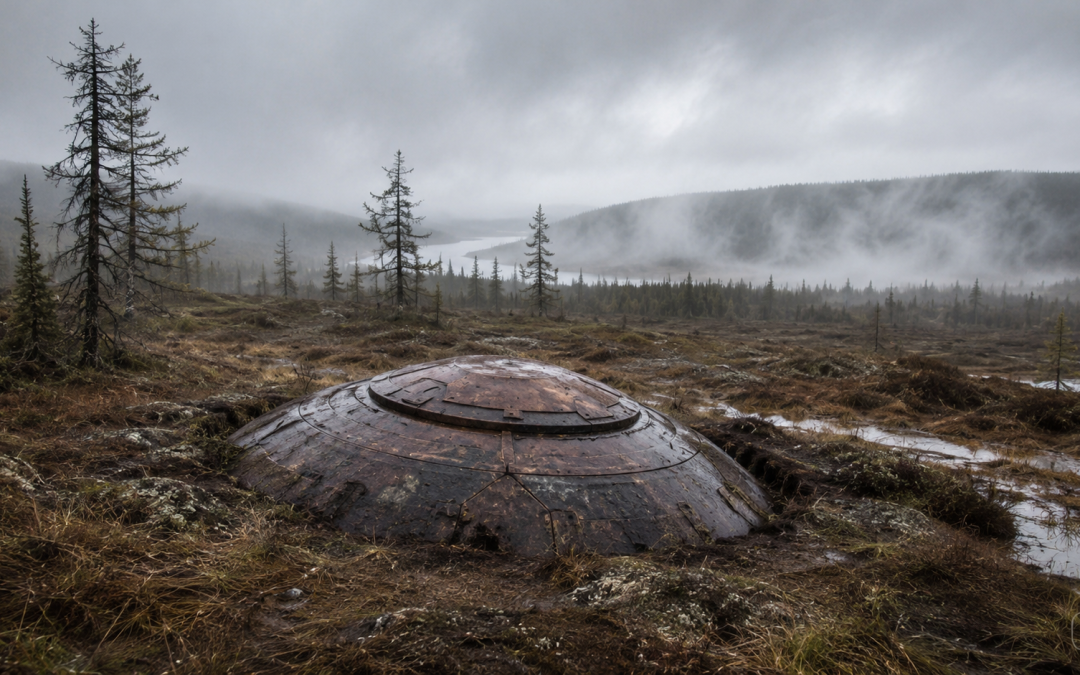
Deep in the Sakha Republic, also known as Yakutia, in the vast and sparsely populated interior of eastern Siberia, there is a story that has circulated for more than a century. It concerns a remote region near the Vilyuy River basin, a place often called the "Valley of Death," where local tradition and later mystery literature describe enormous metallic cauldrons or dome-like structures partly buried in the ground.
The claims vary. Some accounts describe copper or reddish metal domes large enough for a person to enter. Others say the objects are buried chambers, strange metallic half-spheres, or ancient constructions slowly sinking into the permafrost. In the more sensational versions, the cauldrons are said to emit dangerous energies, cause illness, warm the ground around them, or conceal the bodies of strange beings.
Those extraordinary claims remain unproven. What does exist is a fascinating mixture of indigenous place lore, nineteenth-century travel writing, Soviet-era industrial history, environmental anxiety, and modern paranormal amplification.
The Siberian Cauldrons are not a confirmed archaeological discovery. No publicly verified metallic domes have been documented, excavated, scientifically tested, or placed in a museum. At the same time, the legend is not simply an internet invention. Its roots reach back into older regional stories recorded by explorers and repeated by local people around the Vilyuy basin. The result is one of the more intriguing mysteries in Siberian folklore — not because we can prove the cauldrons exist, but because the story sits at the meeting point of oral tradition, difficult geography, environmental trauma, and the human tendency to turn dangerous landscapes into haunted ones.
Where Is the "Valley of Death"?
The reported setting is usually placed somewhere in the Vilyuy River basin of Yakutia. The Vilyuy is a major river in east-central Siberia — the longest tributary of the Lena River, roughly 2,650 kilometers long with a drainage basin of approximately 491,000 square kilometers. It rises on the Central Siberian Plateau and winds through the Sakha Republic before joining the Lena northwest of Yakutsk.
This matters because the Vilyuy basin is enormous. When writers say the cauldrons are "near the Vilyuy River," that does not identify a neat, searchable location. One river often connected with the legend is the Olguydakh, a tributary in the broader Vilyuy system, approximately 191 kilometers long. The name is often connected in mystery writing with the Yakut word for cauldron or boiler, though popular retellings frequently simplify or distort local etymology.
A Critical Caveat
The "Valley of Death" is not a well-defined mapped location in the way a national park or archaeological site would be. It is better understood as a legendary zone within the Vilyuy region rather than a precisely confirmed valley with known boundaries. That vagueness is part of why the mystery has persisted for so long — it cannot be neatly searched or definitively ruled out.
The Core Legend
The basic legend says that somewhere in the remote taiga are large metallic objects — usually described as cauldrons, boilers, domes, or half-spheres — partly buried in the ground. Some accounts describe only the rim showing above the soil. Others claim the objects contain chambers large enough for hunters to shelter inside. In the more traditional version, hunters or travelers who used the cauldrons as shelters later became sick. Symptoms vary by retelling: weakness, headaches, hair loss, sores, and eventual death. Because of this, the area supposedly gained a cursed reputation.
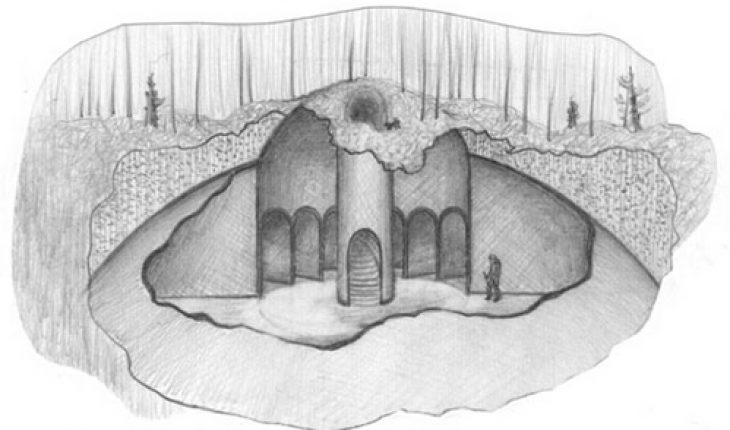
The local name for the area is given as Yelyuyu Chörköçüökh, rendered in Yakut as Өлүү Чөркөчүөх, and the area was considered cursed because hunters who spent the night in the alleged metallic structures later fell ill and died. It is important to emphasize the wording: these are reported traditions and later claims, not verified medical or archaeological records. The story survives primarily as folklore, traveler's report, mystery writing, and speculative retelling.
Richard Maack and the Earliest Cited Account
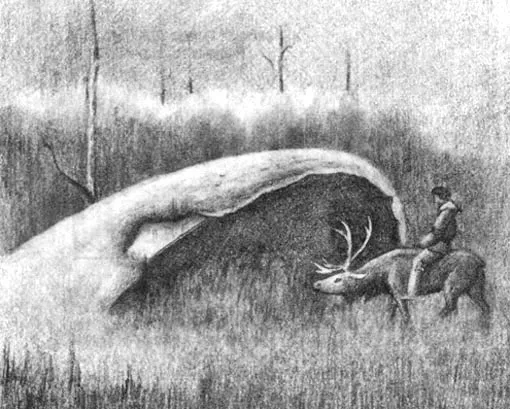
The most commonly cited early source for the Vilyuy Cauldrons is the nineteenth-century explorer and naturalist Richard Karlovich Maack. From 1853 to 1855, Maack led scientific work in the basins of the Vilyuy, Olyokma, and Chona rivers. In his work Vilyuysky Okrug of the Yakutsk Region, he included a report that people in Suntar had told him about a stream near the upper Vilyuy called something like "the big cauldron sank." Near that stream, there was said to be an enormous copper cauldron in the ground, with only an edge visible above the surface. Trees were said to grow inside it.
Maack treated the report cautiously, presenting it as local tale rather than established fact. In paranormal retellings, Maack is often presented as if he personally confirmed the existence of a metallic dome. The available summary of his text is more restrained. He recorded what he had been told. He did not provide photographs, measurements, metallurgical analysis, or a location that later researchers could conclusively verify.
The earliest serious mention does not prove the cauldrons. It proves something more modest but still interesting: stories of a buried copper vessel in the Vilyuy region were already circulating in the nineteenth century.
Why the Story Became So Powerful
The Siberian Cauldrons legend has endured because it contains several elements that make a mystery feel believable even when evidence is thin. It is attached to a real and remote geography — the Vilyuy basin is vast, harsh, and difficult to search thoroughly. Remoteness allows stories to survive because absence of evidence can be mistaken for evidence of concealment.
The story is also tied to indigenous and regional memory. Local people naming or avoiding dangerous places is a normal human response to environmental risk. A place associated with illness, death, strange rocks, or dangerous gases can become mythologized over generations. The cauldrons are described as metallic, which feels artificial. A buried copper object in the taiga immediately raises questions: who made it, why is it there, and why was it abandoned?
The sickness element gives the story a modern edge. Symptoms like hair loss, weakness, sores, and death invite comparisons to radiation, toxins, industrial contamination, or unknown energy fields — especially powerful in a region that later experienced Soviet diamond mining, hydroelectric projects, rocket debris, and underground nuclear testing. The legend therefore works on two levels: it sounds ancient, but it also feels modern. One foot in folklore, one foot in twentieth-century technological anxiety.
The Vilyuy Region and Real Environmental Trauma
One reason the Siberian Cauldrons story should not be dismissed too casually is that the Vilyuy region has experienced genuine environmental damage. Between 1974 and 1987, the Soviet government conducted eleven underground nuclear tests in the Vilyuy regions, and later official acknowledgments admitted two had catastrophic above-ground fallout. Diamond mining, hydroelectric development, contamination, and reservoir flooding disrupted local Sakha communities for decades. The Vilyuy Dam complex radically altered both the natural river regime and the economy of the valley.
Why This Matters
This does not mean the cauldrons are nuclear devices or alien machines. It means that real contamination and technological disruption became part of the lived experience of the region. A nineteenth-century tale of a cursed cauldron can become, in the twentieth century, a story about radiation. In the twenty-first century, it becomes a story about ancient machines. The core fear remains the same: something hidden in the land can harm the human body.
What the Cauldrons Are Said to Look Like
Descriptions differ widely, which is itself a reason for caution. In the oldest Maack-related version, the object is a huge copper cauldron sunk into the earth, with only the rim visible and trees growing inside. Later mystery versions add large metallic domes (reddish or copper-colored, partly buried, hemispherical), hollow chambers warm enough to shelter in, and impossibly sharp exposed edges. The most elaborate accounts describe internal rooms, tunnels, and corridors — and the most extreme include "thin black one-eyed beings" in metal clothing. The more detailed and spectacular the description, the weaker the evidentiary foundation usually is.
Expeditions and Failed Searches
Several later expeditions have searched for the cauldrons or tried to identify unusual circular features in the landscape. A 2006 expedition associated with Czech traveler Ivan Mackerle reportedly used aerial observation and noticed unusual circular formations, but did not produce a verified cauldron, excavation, or scientific confirmation. Local people described the "Valley of Death" not as one single spot, but as a chain of places along the river. A 2008 expedition did not discover them. A 2011 expedition reportedly found an odd object described informally as a "rubber stone," but nothing more.
This pattern is common in remote-landscape mysteries. Searchers find suggestive circles, strange rocks, place-name clues, unusual ponds, local stories, and ambiguous testimony. What they do not find is the object itself in a condition that can be documented and tested. That does not prove the legend is false. It means the current evidence is insufficient to treat the cauldrons as confirmed physical structures.
Possible Natural Explanations
Because no cauldron has been verified, natural explanations remain speculative but worth considering.
Possibility 01
Thermokarst Features
Yakutia's extensive permafrost creates depressions, circular ponds, and collapsed surfaces. To someone moving through remote taiga, circular lakes or ring-shaped ground formations could appear artificial, especially from the air.
Possibility 02
Mineral-Stained Rock
Iron staining, copper deposits, and weathered stone can create reddish or metallic-looking surfaces. A curved rock exposure partly covered with moss and soil might be remembered as a metallic rim.
Possibility 03
Industrial Debris
Soviet industrial activity left behind abandoned machinery, tanks, and metal objects across the region. Fragments found far from obvious settlement could be folded into existing mystery stories over time.
Possibility 04
Gas Seeps or Bad Air
Methane, carbon dioxide pockets, or oxygen-poor depressions can be dangerous. If hunters camped in a poorly ventilated hollow and became ill, the event could attach to the landscape as a curse story.
Possibility 05
Cultural Landscape Lore
In many cultures, dangerous landscapes are explained through stories. A place where people become sick becomes associated with cursed objects, underground beings, or ancient weapons — regardless of the actual cause.
The Role of UFO and Ancient Technology Claims
Modern paranormal culture has dramatically expanded the story. In some versions, the cauldrons become ancient alien installations. In others, they are weapons that shoot fire into the sky. Some connect them to the Tunguska event of 1908, claiming they were part of a hidden planetary defense system. There is no reliable evidence for these claims. They appear to be later speculative additions layered onto a much older regional legend.
This is a common process in paranormal folklore. A strange old story is reinterpreted through whatever mystery framework is popular at the time. In the nineteenth century, it is a local tale. In the Soviet period, it becomes a story about secret technology. In the UFO era, it becomes extraterrestrial. Online, it becomes an "ancient planetary defense system." The original core — local stories of a buried copper cauldron-like object in the Vilyuy region, associated with fear and danger — has a meaningful historical footing. The later additions do not.
What we can say with confidence
- Long-running stories of large buried metallic cauldrons in the Vilyuy region have existed for well over a century
- The earliest cited reference — Richard Maack's nineteenth-century work — recorded a local story about a giant copper cauldron sunk into the earth
- The Vilyuy basin is a real, vast, remote region of eastern Siberia
- The region has experienced real environmental disruption including industrial development, nuclear testing, and rocket debris concerns
- The legend represents genuine regional oral tradition, not a recent internet invention
What we cannot honestly claim
- That the cauldrons exist as physically described
- That they are extraterrestrial or of ancient artificial origin
- That they emit radiation, unknown energies, or dangerous fields
- That people were medically proven to have died from sleeping inside them
- That any expedition has confirmed their location or existence
- That there is a known, accessible location where they can be visited
Researcher's Assessment
The most reasonable interpretation is that the Siberian Cauldrons are a layered legend rooted in regional oral tradition, place names, and nineteenth-century travel reporting, later amplified by modern paranormal and UFO culture. There may have been a real object behind the original story — a natural formation, a mineral-stained rock exposure, a large human-made vessel of ordinary origin, or a detail carried through oral retelling. It is also possible that no physical object existed and that the story arose entirely from place-name folklore and cautionary tradition.
The most interesting thing about the Siberian Cauldrons may not be whether they are metal domes at all. It may be what the legend reveals about how people explain dangerous landscapes. The Vilyuy region has been imagined for generations as a place where the earth hides something harmful, something old, something not fully understood. In a region where modern history has included real hidden dangers beneath the surface, that imagination is not hard to explain.
The cauldrons remain exactly what responsible paranormal research often finds at the edge of evidence: a compelling story, a difficult landscape, a handful of historical references, many later embellishments, and no confirmed physical proof. That does not make the story worthless. It makes it worth handling carefully.