Cryptids · Georgia Folklore
The Altamaha River Monster
Georgia's enduring legend of "Altie" — where blackwater creeks, ancient river ecology, and generations of eyewitness testimony meet
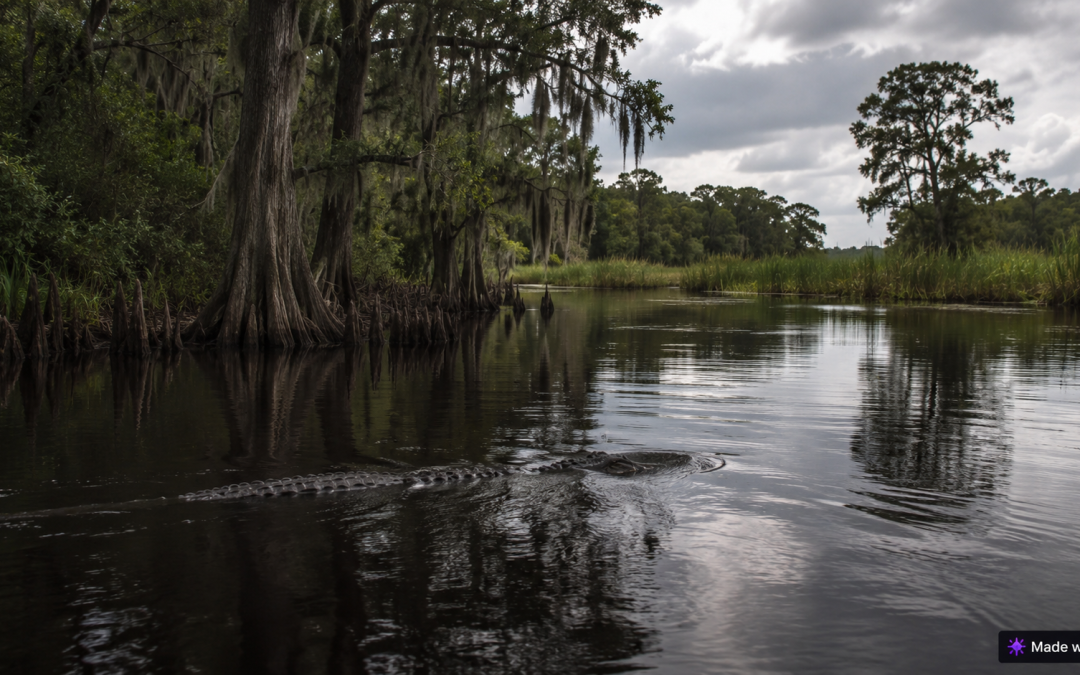
Along the wild, winding waterways of southeastern Georgia, where blackwater creeks slip through cypress knees and the Altamaha River spreads into marsh before meeting the Atlantic, there is a story locals have told for generations. It is the story of a strange creature said to move through the river's deep channels, abandoned rice fields, tidal creeks, and shadowed backwaters. Some call it the Altamaha River Monster. Others know it by a more familiar name: Altamaha-ha, or simply Altie.
Like many regional monsters, Altie lives in the space between folklore, eyewitness testimony, misidentification, and local identity. There is no scientific proof that an unknown monster inhabits the Altamaha River. No confirmed specimen has ever been recovered, photographed clearly, or documented in a way that would satisfy biology. Yet the legend has remained stubbornly alive, especially around Darien and McIntosh County, where stories of a long, serpentine creature in the water continue to circulate.
The Altamaha River Monster is not just a tale about something strange seen in the water. It is also a story about place — and the Altamaha is one of Georgia's great natural corridors, a river system that feels large enough to hide almost anything.
The River Behind the Legend
To understand the Altamaha River Monster, one has to first understand the Altamaha River. Formed by the joining of the Ocmulgee and Oconee rivers near Lumber City, Georgia, it flows through southeastern Georgia toward the Atlantic, passing through forests, swamps, sandbars, and tidal marsh before reaching the coast near Darien and Brunswick. The basin drains nearly a quarter of the entire state — the New Georgia Encyclopedia describes it as the third largest contributor of freshwater to the Atlantic Ocean on North America's eastern shore.
Much of the lower Altamaha and its tributary the Ohoopee River remain among the most intact river systems in Georgia. The river is not a narrow creek passing politely through town. It is a broad, living system of current, mud, fish, reptiles, birds, marsh grass, flooded timber, and tidal movement. In such a place, it is easy to see why a ripple, a rolling back, a shadow under the water, or a large animal surfacing at the wrong angle could become something unforgettable.
What Is the Altamaha-ha?
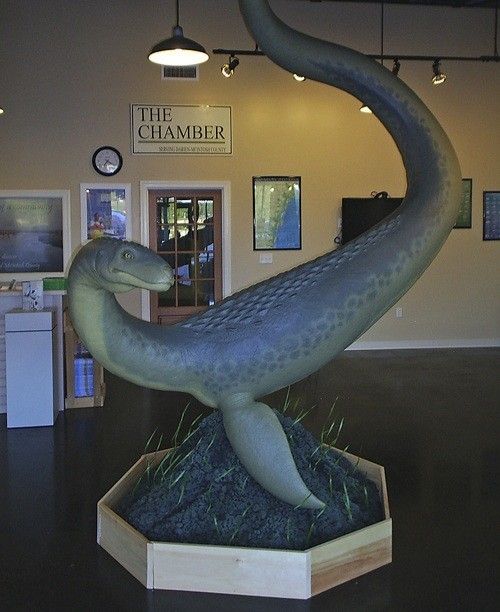
The Altamaha-ha is usually described as a large, serpent-like or aquatic creature said to inhabit the lower Altamaha River and nearby waterways. Reports are especially associated with the area around Darien and McIntosh County. The creature is often described as long-bodied, dark, and capable of moving through the water with a rolling or undulating motion. Some versions describe it as resembling a sea serpent. Others compare it loosely to a prehistoric creature, an oversized fish, or an animal with a long neck.
These descriptions vary, which is common in monster folklore. Witnesses rarely see a full creature clearly. Most sightings involve partial glimpses: a head, a back, a wake, a shape moving beneath the surface, or something rising and disappearing before anyone can get a better look. The legend is now part of Georgia coastal folklore, and Darien has embraced the creature as a local symbol.
Older Roots and Local Tradition
Some modern summaries say the Altamaha-ha legend predates British colonization and is connected to Native traditions, particularly those of the Lower Muskogee Creek people. That claim should be handled carefully. It is reasonable to say that the story is often described as having Indigenous roots, but it is harder to verify the exact age, form, or wording of any early version without primary documentation. Many American monster legends are later retold as ancient Indigenous traditions — sometimes accurately, sometimes loosely, and sometimes through a filter of romanticized folklore.
A grounded approach is best: local tradition associates the Altamaha-ha with older stories of the river, and some sources connect it to Indigenous accounts. However, the surviving popular legend has clearly been shaped by later newspaper stories, regional tourism, cryptid culture, and modern storytelling. That does not make the legend meaningless. Folklore changes with the people who tell it. The Altamaha-ha of today is a layered creature: part river memory, part local warning, part coastal curiosity, part cryptid.
Sightings and Reported Encounters
Reported sightings are often said to date back to 1830, with some sources mentioning claims from the 1820s, including a sea captain reportedly telling a Darien newspaper about a sea monster encounter. The typical sighting pattern is familiar to anyone who studies aquatic monster folklore. A person is near the water, often fishing, boating, or working. They see something too large or oddly shaped to identify quickly. It moves in a way that seems unusual. It may create a strange wake, rise above the surface, or appear in a place where the witness does not expect a large animal. Then it disappears.
The lower Altamaha is exactly the kind of environment where such reports can happen. The water can be dark. Vegetation can obscure sightlines. Large fish, alligators, floating logs, and tidal currents can create confusing impressions. A glimpse lasting only a few seconds can become, in memory, a much more solid image. This does not mean every witness is lying. People can sincerely report strange things and still be mistaken about what they saw. Human perception is not a camera. It is interpretive, emotional, and strongly shaped by expectation.
The Expectation Effect
If someone already knows the river has a monster legend, an ambiguous sighting may be more likely to become an Altie sighting. If someone has never heard the story, they may still report an unidentified animal — only for others to connect it with the legend afterward. The legend and the sightings reinforce each other over time.
Possible Natural Explanations
There are several natural candidates that could account for at least some Altamaha-ha sightings. None of these proves every report is solved, but they offer realistic possibilities worth considering before reaching for more unusual conclusions.
Candidate 01
Atlantic Sturgeon
Large, ancient-looking fish with long bodies and bony plates. They can grow very large, and when seen briefly at the surface they may look unlike any fish most observers expect. One of the stronger natural explanations given the habitat.
Candidate 02
Alligators
The Altamaha system is alligator habitat. A large gator swimming with only part of its body visible creates a low, dark shape. Its wake, tail movement, or sudden dive can seem strange at distance, even to experienced river users.
Candidate 03
Floating Debris
Rivers move things. Logs, vegetation mats, and branches can drift, roll, and release. In dark water, a partially submerged log can look animate if current or trapped air makes it bob. A long object drifting with the current may seem to glide under its own power.
Candidate 04
Marine Animals
Because the lower Altamaha connects to tidal and coastal waters, marine animals occasionally move upriver. Manatees, dolphins, or other animals in unexpected locations can create genuine confusion.
Candidate 05
Optical Conditions
Water distorts. Distance compresses. Waves break up shapes. A head, a stick, a fish, and a current line can become one imagined creature. In folklore-rich settings, the assembled shape the brain constructs may become the local monster.
Why River Monsters Persist
The Altamaha-ha belongs to a larger family of aquatic monster traditions. Nearly every region with deep lakes, wild rivers, or dangerous coastal water develops stories of something large and strange beneath the surface. Scotland has Loch Ness. Canada has Ogopogo. Lake Champlain has Champ. Georgia has Altie.
These creatures endure because water hides things. A forest can be searched. A field can be crossed. A building can be entered. But a river keeps its secrets below the surface. Even today, modern people know that rivers contain animals, wreckage, bodies, currents, and depths they cannot fully see. That uncertainty gives the imagination room to breathe.
The Altamaha River adds another layer. It is not just any river. It has carried Native communities, colonial movement, timber, trade, fishing, and local memory for centuries. A river with that much history almost demands folklore. Altie gives the landscape a face — or perhaps a shadow.
The Darien Connection
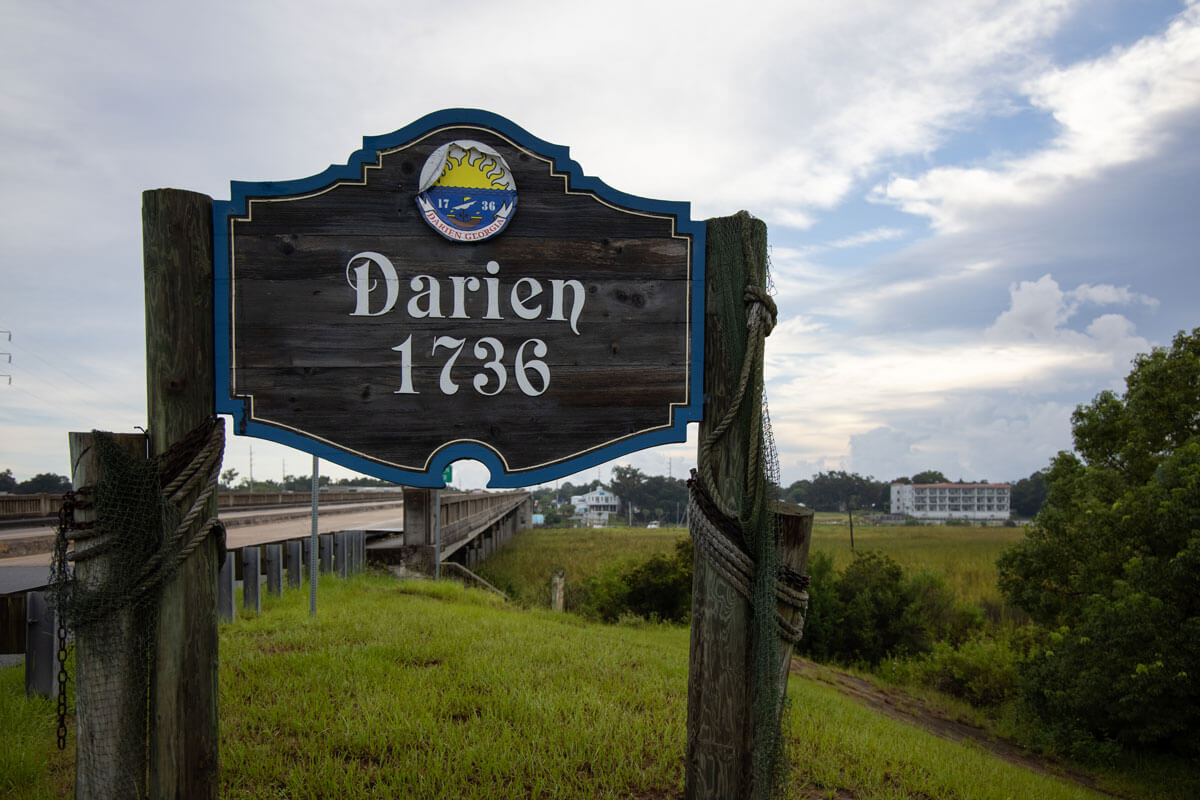
Darien, Georgia is central to the modern Altamaha-ha legend. Established in 1736, the city sits near the mouth of the Altamaha River, where freshwater, salt marsh, tidal creeks, and coastal history come together. It is the kind of place where a river monster story feels at home. Local promotion of Altie does not prove the creature exists, but it does show how folklore becomes part of identity. A monster can serve as a mascot, a tourism hook, a storytelling device, and a way of distinguishing one place from another.
This is common in cryptid folklore. Communities often adopt their monsters with a mix of belief, humor, pride, and commercial practicality. The monster becomes a way to talk about the landscape — and it invites visitors to look twice at the water.
Is There Evidence?
At present, there is no verified scientific evidence proving the existence of an unknown large creature in the Altamaha River. The Altamaha-ha remains a legend supported by stories, reported sightings, and local tradition rather than physical proof. A responsible article should not say Altie is real. It should also avoid dismissing the subject as worthless.
The Right Frame
The best evidence for Altie is cultural, not biological. The legend exists. The sightings exist as claims. The local attachment exists. But the monster, as an undiscovered animal, remains unconfirmed. Folklore can be valuable even when the creature itself is unproven — the reports tell us something about how people experience the river, how communities preserve strange stories, and how mystery attaches itself to certain landscapes.
What the Legend Reveals
Four things Altie tells us
- How powerful a landscape can be. The Altamaha is not a passive backdrop. Its size, darkness, wildlife, and relative wildness help generate the conditions for mystery. The river earns its legend.
- How eyewitness testimony works. People often see something real, but interpretation is the difficult part. A large fish becomes a monster. A log becomes a living shape. A brief glimpse becomes a lifelong story.
- How folklore survives by adapting. Altie may have older roots, but the modern version belongs to newspapers, tourism, cryptid enthusiasts, and online culture as much as to oral tradition. Legends change with the people who tell them.
- The human need to believe familiar places still contain the unknown. In a mapped and measured world, a river monster offers resistance. It says: you do not know everything here.
The Altamaha River is vast enough, old enough, and wild enough to inspire strange reports. Its waters hold alligators, large fish, shifting debris, tidal movement, and shadows that can fool even experienced eyes. That is enough to explain many sightings. It may even explain all of them.
But folklore is not only about explanation. It is about meaning.
Altie endures because the Altamaha itself feels alive. It moves through Georgia like a dark artery, carrying history, silt, memory, and rumor toward the sea. Somewhere in that movement, people keep seeing something. Maybe it is a fish. Maybe it is a log. Maybe it is a trick of light on black water. Or maybe something old still rolls beneath the surface, seen only for a moment before the current closes over it again.